
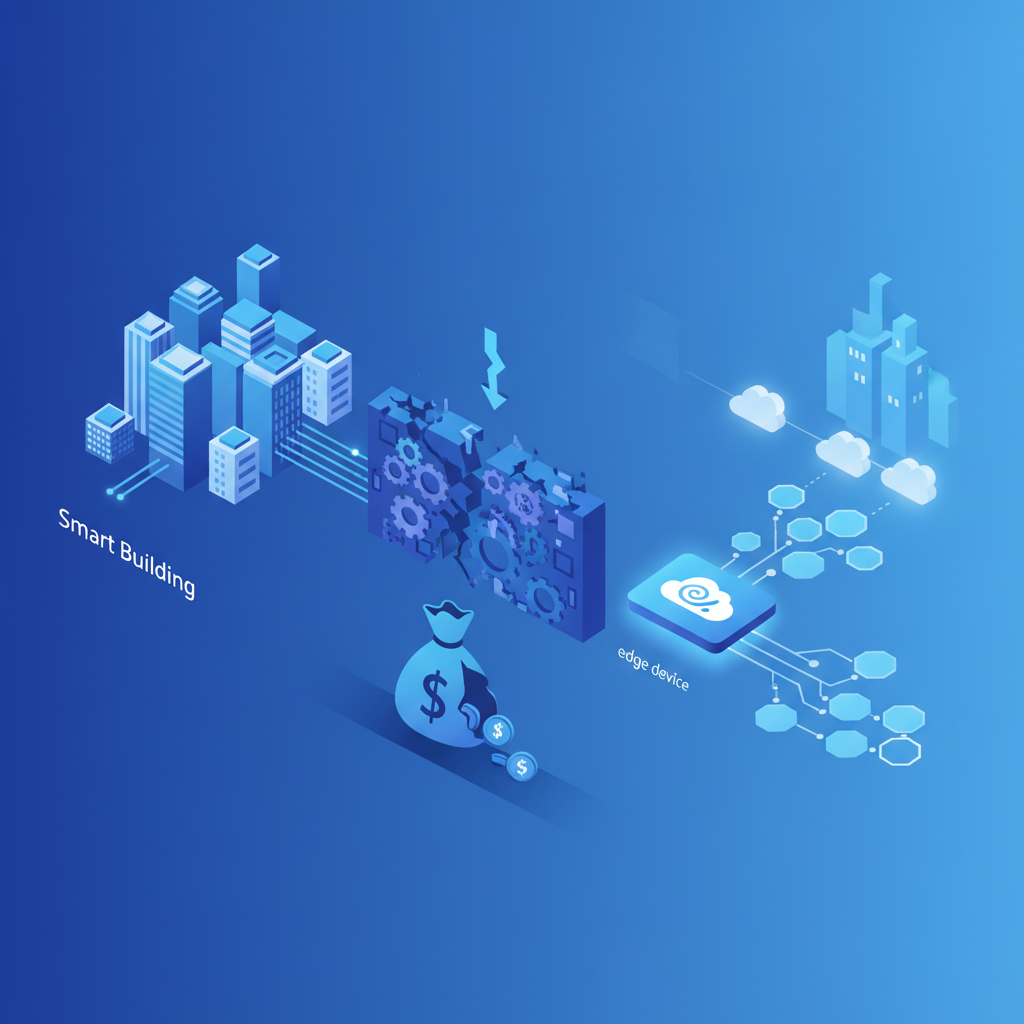
Enterprise capital stewards are unknowingly surrendering over $1.2 billion annually to a hidden enemy: protocol latency. In multi-facility commercial real estate, fragmented operational technology (OT) creates severe bottlenecks, stalling risk-adjusted capital allocation.
Instead of optimizing energy and extending equipment lifecycles, operators are trapped in manual cross-site evaluations. This operational friction exacts a massive toll, proving that without a unified data architecture, smart buildings are severely limited by their siloed foundations.
The 8X Execution Penalty in Building Automation
Evaluating capital risk across multi-vendor facilities manually is an inefficient, labor-intensive process. Industry data reveals an astonishing 87.3% efficiency penalty, driving the cost per execution up to $1,005.84 compared to an optimized physics-floor baseline of $127.07.
This friction forces a 3.2-hour decision latency per forecast query during quarterly capital allocation cycles. Consequently, enterprise operators face a 35% abandonment rate for planned facility upgrades and retrofit transactions.
Across global enterprise footprints, this translates into more than $1 billion in stranded capital deployment pipelines annually. The root cause is not a lack of mechanical visibility, but the inability to compare data across heterogeneous protocol silos at the capital-allocation interface.
The Danger of Superficial AI Overlays
Incumbent industrial conglomerates frequently pitch cloud-hosted software-as-a-service (SaaS) overlays and generative AI copilots. However, deploying these solutions without normalizing the underlying operational data is a costly, systemic mistake.
These sustaining patches leave siloed protocols completely intact. The result is a compounding paradox of digital diagnostics: automated rule engines trigger a super-linear alert volume that creates immediate alarm fatigue for facility managers.
Because physical remediation still requires manual field engineering, these superficial AI wrappers simply bottleneck linear human workflows while protecting legacy billable hours. Enterprise fiduciary capital must demand verifiable data structures before committing to un-audited autonomous control planes.
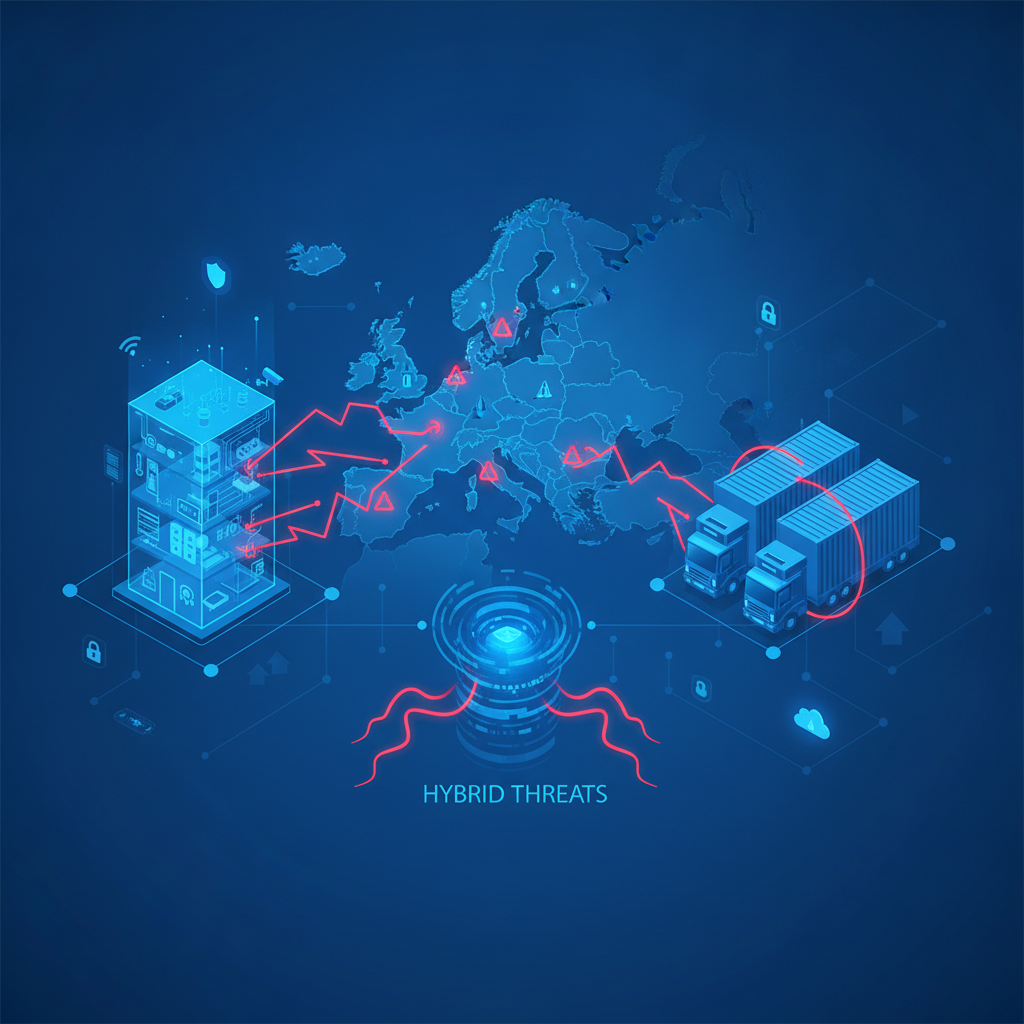
Real-World ICS Security and Telemetry Failures
The empirical reality of enterprise portfolio management requires a sharp distinction between verified physics and vendor assumptions. During a multi-tenant commercial pilot, three facilities registered distinct mechanical anomalies: chiller surges, cooling tower spikes, and condenser water compression.
Localized building management systems classified these as separate equipment faults, queuing costly truck rolls. However, a unified semantic engine revealed the truth: an unannounced, synchronized occupancy surge due to simultaneous tenant move-ins.
Because 42% of point names lacked a common naming schema, the correlation was completely invisible to local controllers. Furthermore, uncorrected sensor drift across un-normalized footprints poses severe risks, wasting up to $22,000 per air handling unit over a typical lifecycle and threatening robust ICS security postures.
Normalizing BACnet Protocols with Edge Translation
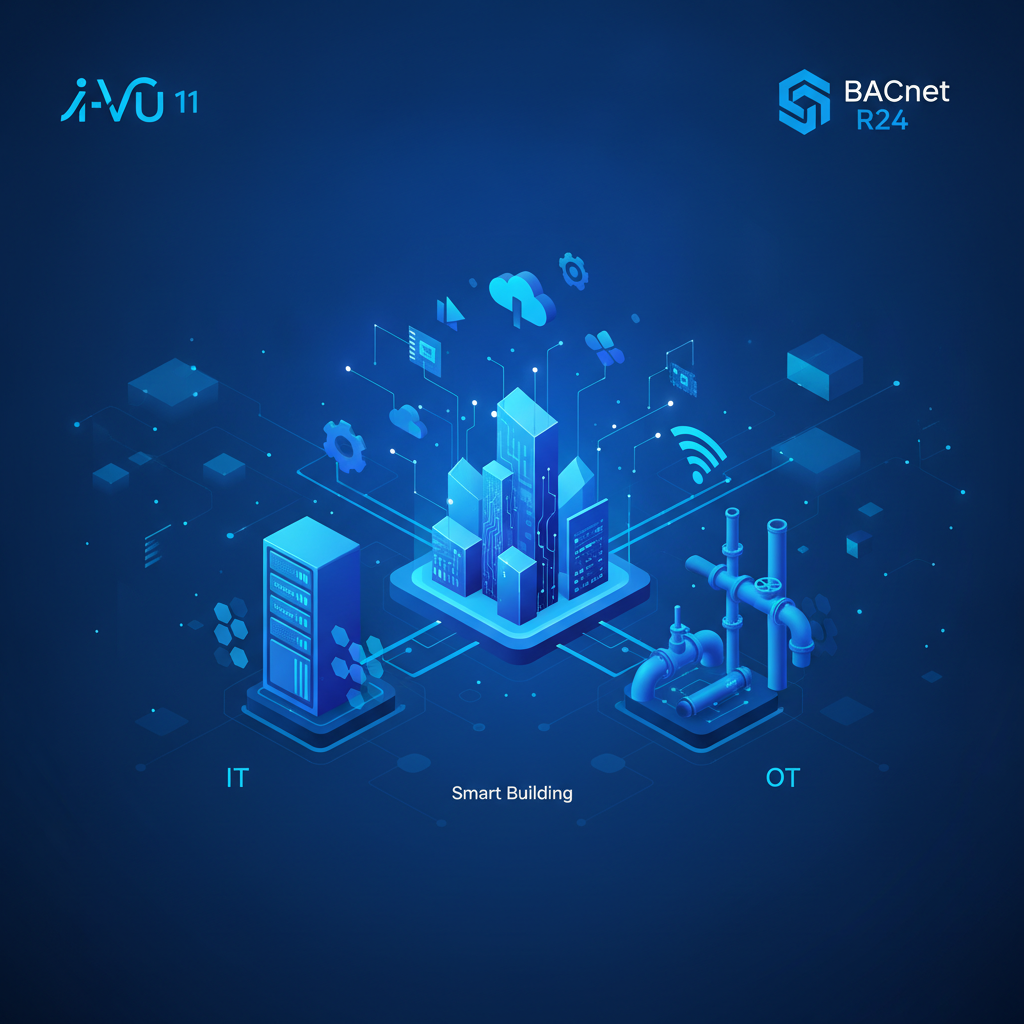
To eliminate this operational drag, enterprise buyers must pivot toward a federated, read-only semantic translation layer. Disparate BACnet, MS/TP, Modbus, and OPC-UA point names must be normalized into an auditable schema at the edge.
This is where adopting an integrated platform like BAaaS.io transforms portfolio operations. By providing a centralized cloud ecosystem, it harmonizes real-time telemetry across diverse hardware, establishing a verified baseline before executing any autonomous adjustments.
Delivering intelligent building management through proactive maintenance and centralized control, BAaaS.io ensures operators can secure their physical infrastructure, improve energy efficiency, and successfully eliminate the costly multi-vendor evaluation stack.
Conclusion
You cannot optimize what you cannot uniformly measure. The $1.2 billion capital friction tax will continue to drain enterprise portfolios as long as fragmented, legacy protocols dominate the mechanical room.
Chief investment officers and risk committees must halt capital allocations for superficial dashboards. Shifting focus to an audited, normalized semantic infrastructure is the only defensible pathway to unlocking true smart building autonomy and protecting long-term enterprise value.