

South Africa’s commercial real estate sector is facing an unprecedented operational squeeze. With Eskom and municipal electricity tariffs climbing steadily and the regulatory mandate for Energy Performance Certificates (EPCs) demanding verifiable energy accounting for buildings over 2,000 square meters, efficiency is no longer an abstract sustainability goal—it is a balance-sheet imperative. Because heating, ventilation, and air conditioning (HVAC) consume between 30% and 60% of a commercial facility’s total power, traditional, reactive facility management can no longer keep pace.
Seeking viable solutions, a delegation of South African shopping center executives, consulting engineers, and mechanical contractors recently toured Seoul, South Korea. By examining high-density facilities like the 555-meter Lotte World Tower and the 26-building LG Science Park campus, the delegation witnessed how advanced building automation, centralized telemetry, and open protocol architectures can transform energy liabilities into streamlined operational assets.
The South African Operational Dilemma: Escalating Tariffs and Mandatory EPCs
For South African property portfolios, utility volatility is compounded by stringent compliance obligations. The rollout of Energy Performance Certificates requires commercial assets to clearly display their metered energy intensity. Because an EPC grade depends directly on measured kilowatt-hours per square meter, inaccurate sub-metering or unoptimized central plant equipment directly penalizes an asset’s market value and regulatory standing.
Compounding this challenge is the fragmented state of legacy building automation. Shopping malls and commercial office parks often resemble an archaeological dig of disparate controls: chillers on proprietary networks, rooftop VRF units on standalone controllers, and energy meters reporting to isolated data loggers. Without a unified supervisory layer, facility teams cannot actively shed loads, detect performance anomalies, or verify time-of-use tariff optimization.
Holistic Plant Engineering: Tactical Lessons from Lotte World Tower
Seoul’s 123-storey Lotte World Tower provides a prime engineering model for how large-scale facilities overcome similar constraints. Earning a LEED Gold certification, the supertall structure functions not as a collection of separate mechanical assets, but as an integrated, self-balancing energy ecosystem. Nearly 15% of the tower’s energy requirements are met through integrated heat recovery, geothermal loops, wastewater energy harvesting, and rooftop renewables.
Crucially for South African engineers navigating peak-demand utility penalties, the tower deploys a sophisticated thermal ice storage plant. By running chillers overnight during cheap off-peak hours to freeze water, the system shifts thermal energy storage to offset massive cooling loads during high-tariff daylight hours. Applying this level of dynamic orchestration requires real-time telemetry and unified control over chillers, variable refrigerant flow (VRF) networks, and environmental sensors.
Breaking Vendor Silos with Open BACnet Architectures
At the 26-building LG Science Park in Magok, the delegation observed the practical execution of cross-portfolio management. Rather than operating 26 disparate building management systems (BMS), the entire campus feeds operational telemetry into a centralized supervisory platform. This consolidated architecture allows engineers to manage HVAC, lighting, electrical distribution, and vertical transportation under one operational roof.
The Critical Role of BACnet in Modern ICS Security and Scalability
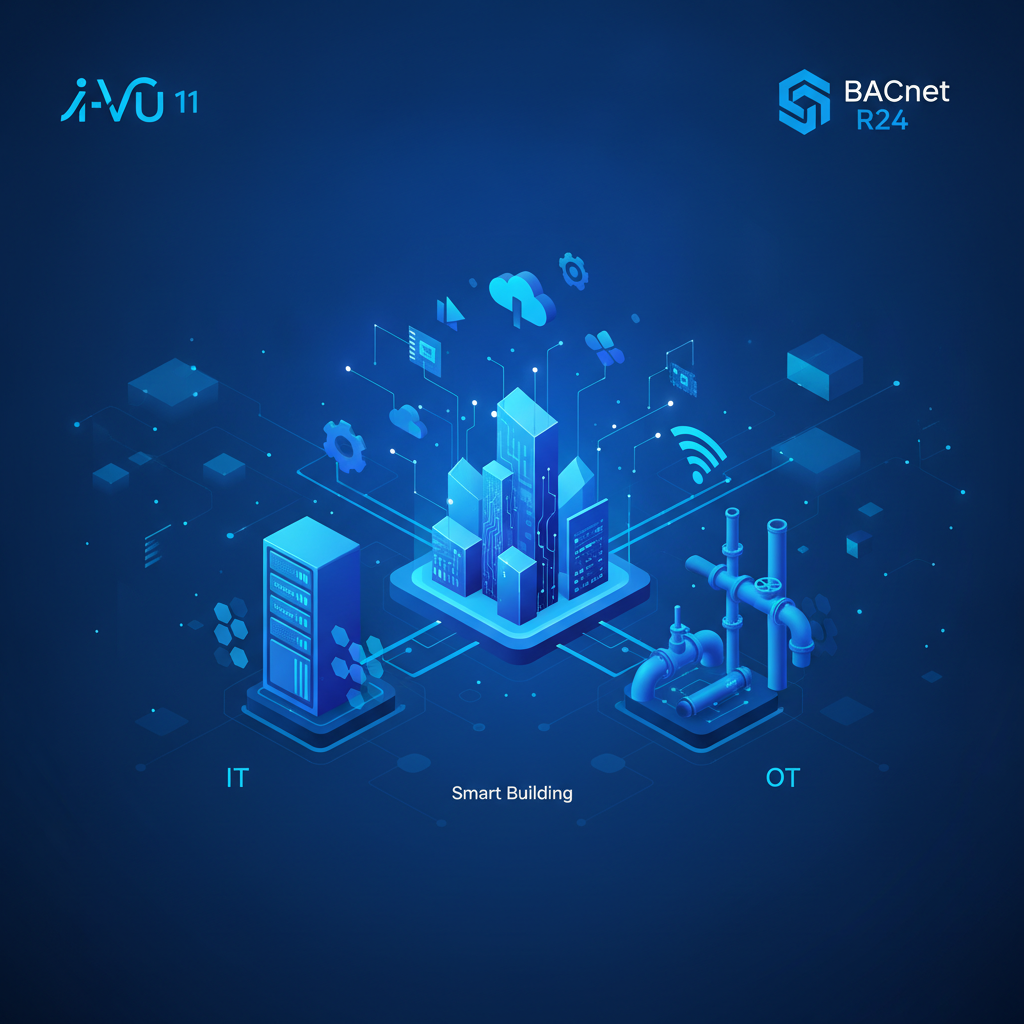
The foundation of this scalable integration is BACnet—the global standard for building automation and control networks. By standardizing communications across multi-vendor chiller plants, VRF networks, air-handling units, and electrical sub-meters, BACnet eliminates proprietary hardware lock-in. Furthermore, modern implementations allow facility engineers to bridge edge devices securely to supervisory systems, improving industrial control systems (ICS) visibility while mitigating common perimeter vulnerabilities.
When open protocols are deployed correctly, machine-learning engines can dynamically modulate setpoints based on live room occupancy, ambient air quality, and forecasted outdoor temperatures. For retail property managers, this level of control prevents over-cooling empty common spaces while maintaining strict tenant comfort in high-footfall anchor zones.
Modernizing Building Operations Through Cloud Integration
While massive capital investments enable bespoke automated campuses like Magok, multi-tenant retail and commercial properties require agile, cost-effective solutions to modernize their legacy operations. Upgrading every field controller with expensive on-premise hardware is often financially impractical, creating a substantial barrier to achieving modern EPC compliance standards.
This is where specialized platforms like BAaaS.io (Building Automation as a Service) bridge the gap between legacy infrastructure and intelligent management. By offering centralized cloud-native control, BAaaS.io collects real-time telemetry across distributed sites without requiring complete infrastructure replacement. Building managers can implement automated environmental adjustments, track continuous energy consumption for EPC grading, and utilize proactive maintenance alerts to resolve equipment degradation long before it causes costly downtime.
Conclusion
The lessons brought back from Seoul illustrate a critical paradigm shift: smart building engineering is not determined by the physical height of a tower, but by the intelligence and integration of its operational data. As energy costs escalate and regulatory scrutiny tightens across South Africa, operating fragmented, siloed mechanical equipment is no longer viable. Commercial asset owners who invest in open communication standards, centralized telemetry, and scalable cloud-driven automation will protect their operating margins and ensure long-term portfolio resilience.