
Home Assistant has matured from an enthusiast platform into a compelling demonstration of modern, decoupled edge architecture. While its out-of-the-box installation provides basic device aggregation, the real architectural strength emerges when operators deploy modular plugins that establish resilient, local-first control loops.
By implementing specialized services such as MQTT brokers, hardware abstraction layers, and protocol bridges, users transform a standard smart controller into a responsive automation engine that mirrors the principles found in enterprise-grade building management.
Decoupling Edge Telemetry with Mosquitto and MQTT
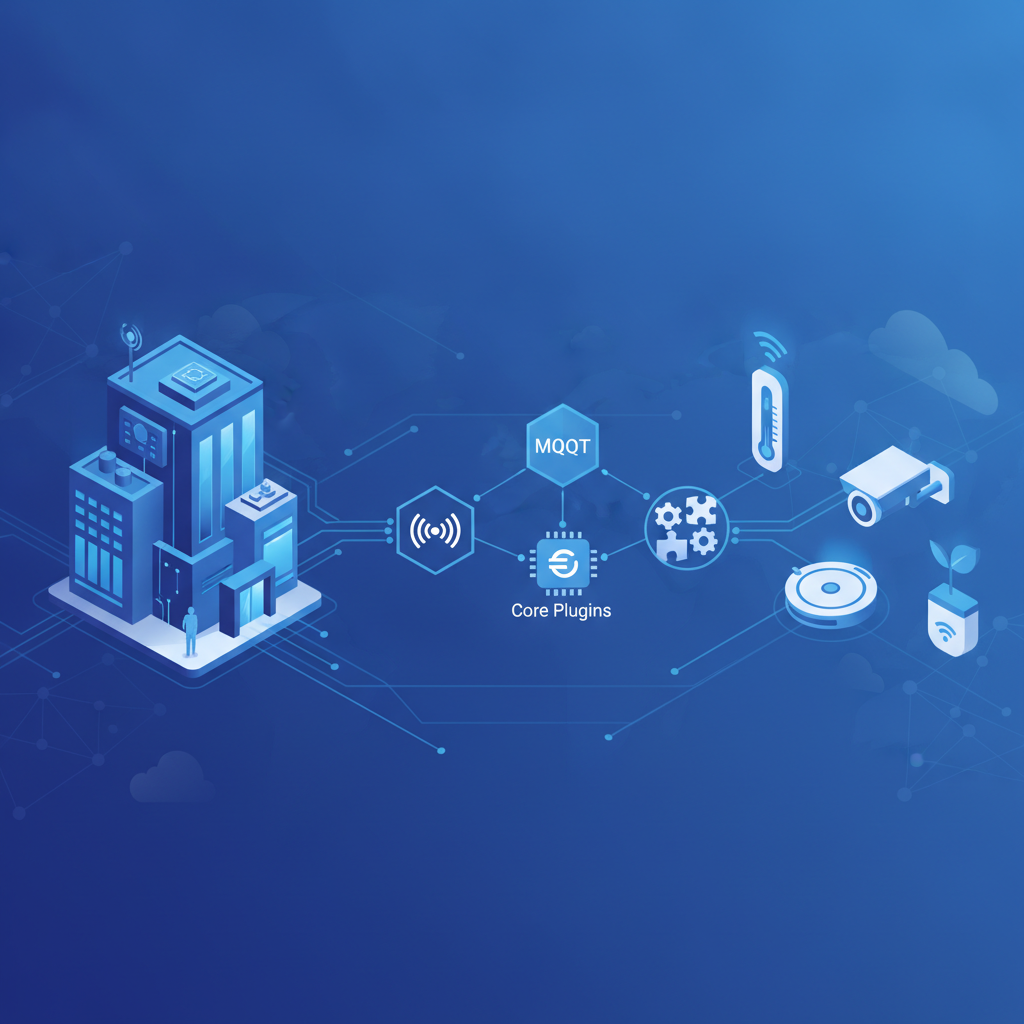
In both residential IoT and industrial control systems (ICS), point-to-point integrations create brittle dependencies and operational bottlenecks. Deploying a dedicated Mosquitto MQTT broker introduces an asynchronous publish-subscribe model that neatly isolates sensor telemetry producers from automation logic consumers.
MQTT serves as a lightweight, low-overhead messaging bus capable of transmitting environmental state changes, occupancy updates, and control payloads with sub-second latency. This architecture ensures that network blips or individual device failures do not cascade through the broader automation infrastructure.
Bridging Protocol Silos with Zigbee2MQTT and ESPHome
Hardware fragmentation remains one of the largest obstacles in smart facility engineering. The Zigbee2MQTT plugin bypasses proprietary, cloud-tethered hubs by translating low-power mesh signals directly into standardized, human-readable MQTT topics, unlocking granular configuration settings and deep diagnostic data.
Complementing this approach, ESPHome eliminates traditional embedded development barriers by allowing engineers to compile custom firmware for low-cost ESP32 microcontrollers via declarative configuration files. This capability enables rapid fabrication of bespoke environmental monitoring nodes, multi-sensor arrays, and local relay controllers without writing low-level C++ code.
Ecosystem Maturity: From Community Extensions to Core Standards
The transition of the Home Assistant Community Store (HACS) into an officially supported Marketplace highlights how edge ecosystems mature. Modular repositories allow operators to integrate cutting-edge interface components and niche protocol gateways long before they become standardized core features.
Similarly, tools like Music Assistant show how unified middleware can orchestrate disparate output standards—such as DLNA, AirPlay, and Chromecast—into a cohesive distribution network, proving that interoperability does not require single-vendor lock-in.
Scaling Edge Principles to Commercial Operations with BAaaS.io
While local edge stacks like Home Assistant offer tremendous versatility for single-site and residential setups, enterprise commercial environments face different operational realities. Managing multi-tenant properties, complex HVAC air-handling units, and stringent energy compliance frameworks requires enterprise-grade oversight and distributed governance.
This is where BAaaS.io elevates modern automation concepts to an enterprise tier. Delivering Building Automation as a Service, BAaaS.io provides centralized infrastructure control, proactive equipment maintenance, and real-time environmental telemetry to optimize tenant comfort while actively shrinking a building’s carbon footprint.
By combining robust role-based access control with automated adjustments based on occupancy and natural ambient conditions, BAaaS.io bridges the gap between nimble edge IoT concepts and the reliability demanded by commercial real estate operators.
Conclusion
The true power of modern building automation lies in open protocols, decoupled message brokers, and extensible hardware interfaces. Whether using MQTT and microcontrollers to refine a local residential hub or deploying cloud-scale platforms for commercial portfolio management, the blueprint remains the same: prioritize open standards, eliminate proprietary silos, and design for continuous telemetry.