
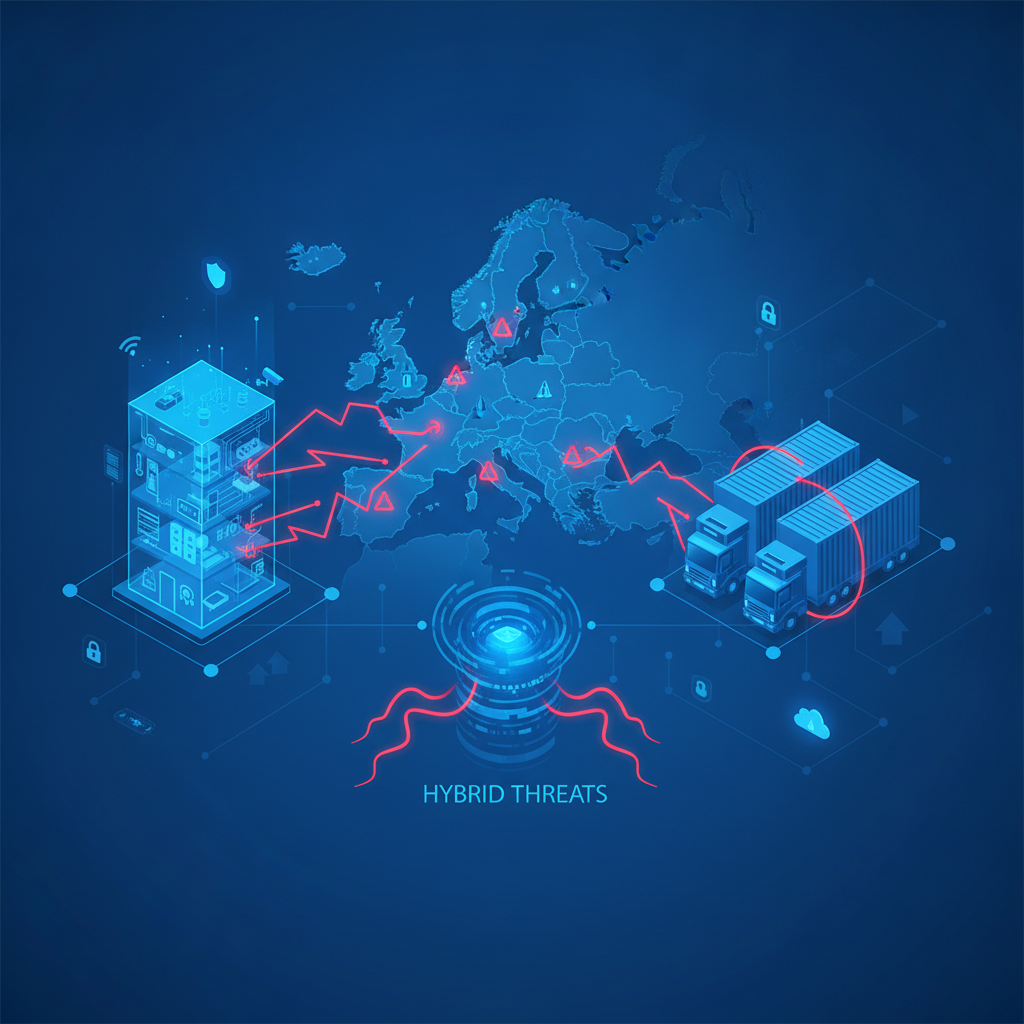
Recent coordinated disruptions across European supermarkets, blood banks, media outlets, and aviation hubs signal a dangerous evolution in hybrid warfare. Rather than burning high-cost zero-day exploits, threat actors systematically leveraged foundational operational technology (OT) weaknesses—unencrypted legacy protocols, internet-exposed human-machine interfaces (HMIs), and default vendor credentials—to paralyze critical commercial and civil infrastructure.
The physical fallout was immediate: compromised refrigeration controllers drove display temperatures above 50°C, spoiling massive quantities of perishable food and jeopardizing regional blood supplies. When combined with simultaneous bomb hoaxes against transportation networks, these incidents illustrate an undeniable reality: building automation systems (BAS) and industrial control systems (ICS) are now frontline targets in geopolitical and economic coercion campaigns.
Cold-Chain Sabotage: Weaponizing Modbus, BACnet, and Industrial HMIs
Forensic telemetry from the affected European facilities reveals that attackers systematically bypassed enterprise IT perimeters by scanning for publicly accessible supervisory control and data acquisition (SCADA) endpoints and field controllers. Once inside, adversaries modified operating setpoints and disabled automated safety tripwires, converting refrigeration units into heating elements without triggering standard alarms.
These breaches spotlight the architectural vulnerabilities inherent in legacy building automation. Field bus protocols such as standard BACnet/IP and Modbus TCP were engineered decades ago for isolated serial networks, completely lacking native encryption, cryptographic message signing, and device identity verification. When systems integrators expose these endpoints to the public internet via port forwarding to facilitate remote maintenance, they invite remote tampering.
Remediating these breaches proved costly. Facilities were forced to physically isolate controllers, flash device firmware, rotate credentials across third-party fleets, and restore baseline setpoints from backups. In cold-chain logistics, an outage measured in hours invariably translates into total inventory write-downs and severe regulatory liabilities.
The Anatomy of the Hybrid Attack Chain
The mechanics behind these infrastructure breaches followed a repeatable, low-friction attack cycle designed for maximum operational disruption. Attackers scanned broad IP ranges for exposed industrial control ports—such as BACnet UDP port 47808 and Modbus TCP port 502—locating unhardened refrigeration racks and facilities controllers.
Initial access was achieved almost exclusively through unpatched firmware vulnerabilities or default factory credentials left active on third-party remote maintenance portals. Lacking multi-factor authentication (MFA), compromised vendor accounts granted intruders immediate administrative command over central building management software.
Once authenticated, adversaries executed subtle setpoint manipulations while actively suppressing alarm telemetry to delay physical discovery. Whether orchestrated by state-aligned actors seeking economic attrition or opportunistic extortionists, the strategic goal was identical: degrade public trust, strain emergency services, and force astronomical operational costs onto private enterprise.
Eliminating the Attack Surface with Zero Trust Architecture
Stopping this vector requires abandoning the obsolete assumption that OT networks can be protected solely by brittle perimeter firewalls. Traditional deployments relying on unencrypted broadcast domains, static port forwarding, and legacy BACnet Broadcast Management Devices (BBMDs) provide adversaries with lateral mobility once any boundary device falls.
Modern industrial and commercial facilities must pivot toward a Zero Trust edge-to-cloud security posture. This requires mutual certificate-based TLS authentication, granular role-based access control (RBAC), and continuous monitoring of machine-to-machine control commands. Industrial controllers must be treated as untrusted endpoints that accept commands only through cryptographically signed sessions.
This architectural shift is precisely what BAaaS.io accomplishes for critical building operations. Built on Microsoft Azure, BAaaS.io eliminates the need for exposed on-premises supervisory servers, open inbound firewall ports, and unmanaged VPN tunnels. By delivering native support for Zero Trust BACnet Secure Connect (BACnet/SC) alongside Modbus, LonWorks, KNX, LoRaWAN, and MQTT, the platform encrypts all point telemetry with TLS and enforces mutual PKI authentication.
By harmonizing multi-protocol control points into a single, cloud-native operational pane, BAaaS.io provides the centralized visibility necessary to stop tampering in real time. Continuous edge monitoring flags anomalous setpoint changes, alerts operators to suppressed threshold alarms, and isolates unauthorized command sequences before cold-chain integrity or life safety systems are compromised.
Actionable Resilience: Prioritizing OT Defense Across Enterprise Operations
Securing building automation and cold-chain infrastructure against hybrid aggression requires immediate, phased intervention. Operators of healthcare facilities, cold storage, and commercial retail cannot afford multi-year procurement delays when basic hygiene yields immense defensive value.
Within the first 72 hours, asset owners must audit external IP footprints, sever direct public internet access to all BACnet, Modbus, and HMI interfaces, and enforce strict MFA and password rotations across all vendor service accounts. Validating the functional integrity of physical tripwires and alarm escalation chains is paramount.
Over a 30- to 90-day horizon, organizations must enforce micro-segmentation between IT and OT networks, establish strict third-party remote access governance with time-bound sessions, and deploy automated configuration backups. Standardizing on secure, encrypted management protocols ensures that even if an edge device is targeted, automated anomaly detection halts unauthorized overrides before operational failure occurs.
Conclusion
The cyber disruptions rippling across Europe demonstrate that physical facilities are no longer insulated from geopolitical conflict. When supermarket chillers and blood bank repositories can be sabotaged through unencrypted field protocols and factory default passwords, building automation becomes a matter of national security and enterprise survival.
Defending critical infrastructure requires dismantling the legacy paradigm of open, unauthenticated field networks. By adopting Zero Trust frameworks, closing internet-facing maintenance portals, and leveraging resilient cloud-native platforms like BAaaS.io, organizations can successfully insulate their operations against both targeted hybrid warfare and opportunistic extortion.