

Commercial facility managers and building automation engineers face a persistent operational blind spot: electrical utility meters report gross consumption, but rarely reveal the granular distribution of inductive and non-linear loads across individual distribution panels. Consumer-grade submetering devices typically output aggregated active power readings over proprietary cloud protocols, stripping engineers of vital power quality metrics like phase angle and reactive power.
The newly announced Elektor ESP32 Energy Meter v2.0 disrupts this status quo by packaging enterprise metering silicon into an open-source, DIN-rail ecosystem. Engineered with the Microchip ATM90E32AS poly-phase metering IC and an ESP32-S3 microcontroller, the device unlocks industrial-tier electrical telemetry for smart buildings, streaming high-frequency data directly over Wi-Fi via MQTT and ESPHome without vendor lock-in.
Commercial-Grade Poly-Phase Metering Meets Galvanic Isolation
Legacy energy monitors often depend on external, bulky step-down transformers to step down mains voltages for analog-to-digital converters (ADCs), which introduce phase shifts and consume valuable DIN-rail real estate. The v2.0 redesign replaces these transformers with precision anti-surge resistor dividers that sample mains voltage directly, improving harmonic accuracy while drastically shrinking the footprint into a standard four-module Hammond DIN-rail enclosure.
Mains-adjacent sensing introduces severe electrical safety requirements. The Elektor architecture implements a strict physical and electrical boundary using a Diodes API7741 digital isolator alongside dual isolated AC/DC power converters. This galvanically separates the high-voltage sensing domain from the ESP32-S3 logic board, ensuring that programming interfaces like the onboard USB-C port, low-voltage control circuits, and external interfaces remain safe to handle.
Granular Power Quality Telemetry and Native MQTT Integration
Modern building automation demands more than accumulated kilowatt-hour metrics. The ATM90E32AS front-end provides full four-quadrant power analysis per phase, capturing active, reactive, and apparent power, line frequency, power factor, and individual phase angles. This level of granularity is critical when monitoring inductive assets such as variable refrigerant flow (VRF) heat pumps, HVAC chillers, and elevator lift drives.
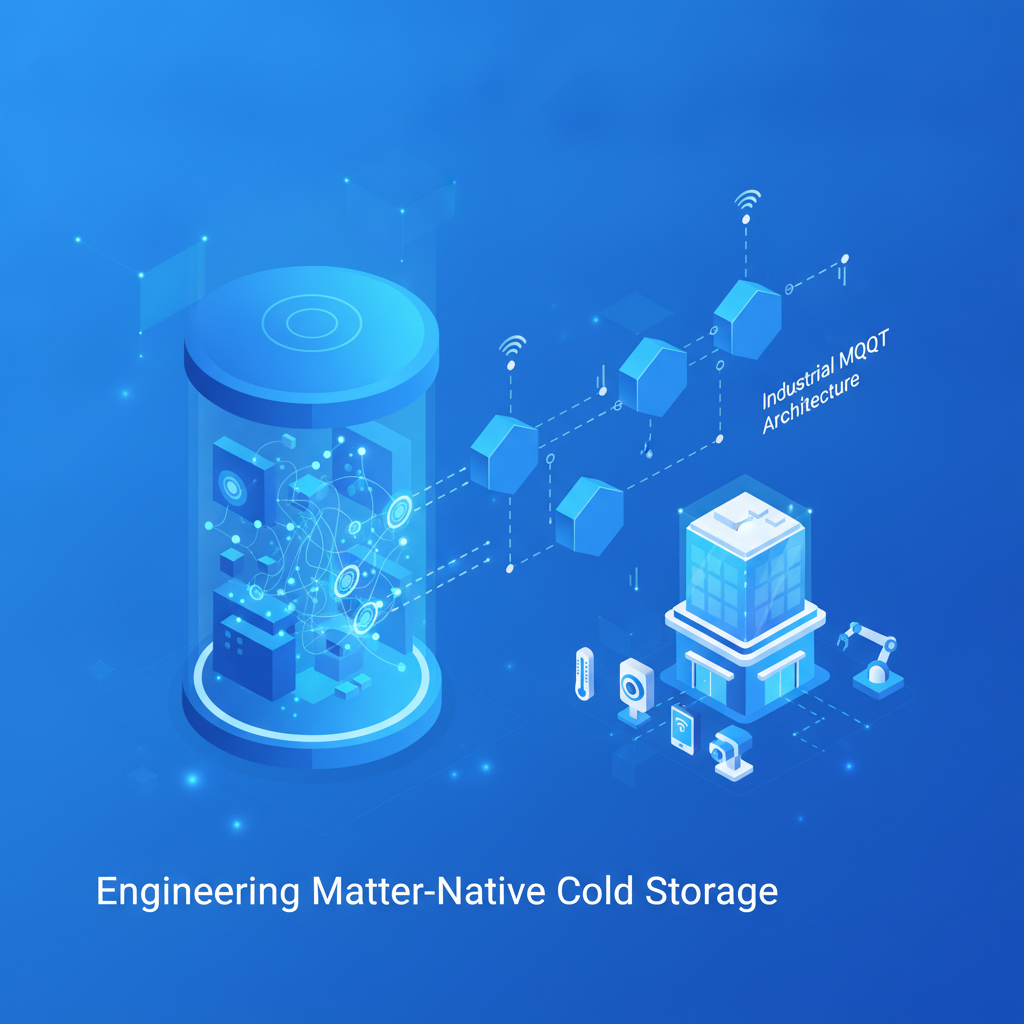
By leveraging an isolated high-speed SPI link, the ESP32-S3 continuously samples this telemetry and publishes real-time payloads via MQTT. This native protocol support allows facility engineers to publish sub-second electrical events straight into local supervisory engines or industrial IoT brokers, completely bypassing recurring cloud subscription fees while upholding zero-trust operational security.
Edge AI Diagnostics on Electrical Signatures
Beyond traditional telemetry, the ESP32-S3’s dual-core Xtensa processor runs lightweight edge AI models developed during the v1.0 iteration. By evaluating instantaneous current wave distortions via YHDC SCT-013 split-core current transformers, the meter performs non-intrusive load monitoring (NILM) to classify appliance signatures directly at the breaker level.
Bridging Submetering Telemetry to Cloud Building Automation
While local edge meters excel at gathering electrical telemetry, enterprise commercial properties require these data streams to interact dynamically with supervisory building management systems. Raw MQTT topics detailing low power factors or phase imbalances must trigger real-world actions, such as staging chiller sequences, isolating faulty air handlers, or orchestrating automated demand response routines.
This is where comprehensive platforms like BAaaS.io transform raw sensor points into operational efficiency. By ingesting edge telemetry into a centralized Building Automation as a Service environment, BAaaS.io provides facility managers with centralized control, proactive maintenance alarms, and automated environmental adjustments. When submetering hardware detects anomalies—such as an overcurrent event or a degrading compressor signature—the unified cloud infrastructure can dynamically redistribute electrical loads and adjust building operations before equipment failures disrupt tenants.
Conclusion
The Elektor ESP32 Energy Meter v2.0 proves that open-source hardware can match commercial poly-phase instrumentation standards when designed with proper electrical isolation and enterprise silicon. For smart buildings, the meter bridges the gap between raw physical panelboards and high-level optimization suites.
Deploying open MQTT-native submeters alongside scalable orchestration platforms like BAaaS.io establishes a modern foundation for sustainable facility management. As energy grids become more volatile and electrification accelerates, transparent, edge-to-cloud power observability transitions from an engineering novelty into an absolute operational necessity.