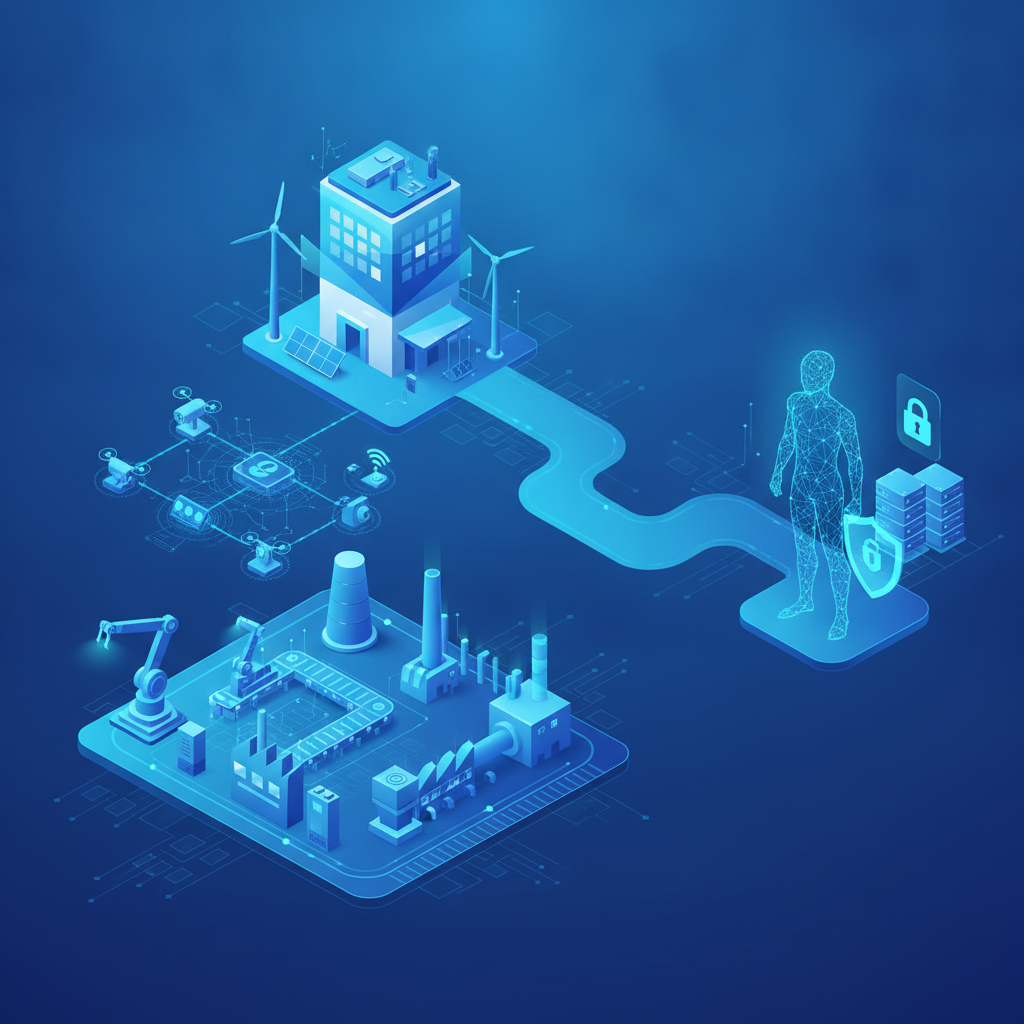


The era of the true “air gap” is officially over. Historically, manufacturing floors, process plants, and building automation systems operated in complete isolation. Programmable logic controllers (PLCs) and supervisory systems communicated in proprietary languages, relying on physical segregation as their primary security measure. Today, the relentless push for real-time analytics and predictive maintenance has shattered that wall, merging Operational Technology (OT) with enterprise IT.
While connecting plant floors and smart facilities to enterprise networks unlocks tremendous operational value, it also turns every new connection into a potential conduit for cyber threats. Threat actors who should never have access to critical equipment now have pathways through vulnerable IT systems. Purpose-built ICS security is no longer an optional upgrade; it is the fundamental baseline for modern industrial and building infrastructure.
The Hidden Risks of IT/OT Convergence
Real operational value is catalyzing the push to connect IT to OT systems. Production data must flow into business intelligence dashboards in near real-time, and maintenance teams require remote diagnostic capabilities to avoid costly physical site visits. However, industrial control systems (ICS) and legacy automation frameworks were engineered for availability and safety—not confidentiality.
Protocols like Modbus, DNP3, and OPC-UA dictate the physical world, controlling valve positions, robotic movements, and HVAC environments. Yet, these foundational protocols largely lack native authentication or encryption. When a facility exposes these legacy protocols to modern enterprise IT networks without proper mediation, a compromised IT endpoint can easily pivot to manipulate safety-critical physical controls.
Why Enterprise Firewalls Fail in Operational Environments
A standard office firewall is designed to inspect HTTP, DNS, and standard web traffic. It has zero semantic understanding of industrial automation protocols. Consequently, traditional IT firewalls cannot distinguish between a legitimate setpoint adjustment command from a process engineer and a malicious payload designed to alter critical infrastructure.
Industrial firewalls solve this through deep packet inspection engines built specifically for OT. They read and understand protocols like Modbus contextually, allowing them to block malformed or dangerous commands while permitting standard telemetry. Furthermore, failure states are handled entirely differently. If an enterprise firewall crashes, it fails closed, dropping all traffic. In a manufacturing plant or a mission-critical smart building, an abrupt network shutdown could trigger catastrophic equipment damage.
OT-specific firewalls are engineered for fail-safe physical continuity, ensuring active processes finish their cycles without dangerous interruptions. They tolerate the physical conditions and latency requirements that an office deployment never faces.
Enforcing Segmentation with the Purdue Model
Leading global standards, including guidance from NIST and the UK’s National Cyber Security Centre, agree on a foundational principle: network segmentation and visibility must be structurally inherent, not tacked on after connectivity is established.
Most successful ICS security architectures leverage the Purdue reference model. This layered methodology isolates the enterprise network, site business networks, supervisory control layers, and basic control layers into separate, tightly managed zones. Industrial firewalls sit at these critical boundaries to govern the conduits between them.
By enforcing strict access control via the Purdue model, organizations ensure that a hacked laptop on the corporate Wi-Fi cannot traverse the network to tamper with a critical chiller plant, a wastewater pump, or an automotive assembly line.
Securing Smart Buildings as Critical Infrastructure
The security principles governing industrial manufacturing networks are identical to those required for modern commercial real estate. Smart buildings are essentially vast, interconnected operational technology networks. HVAC, lighting, access control, and life-safety systems all rely on sensors and controllers that demand rigorous building automation security methodologies.
This is where specialized cloud ecosystems become invaluable. Platforms like BAaaS.io provide a secure, unified network to monitor and control property-wide infrastructure. By offering centralized control with robust, built-in authentication and role-based access, BAaaS ensures that building data and physical systems remain strictly isolated from unauthorized enterprise traffic.
Managing this “integrated building information sphere” safely requires bridging the IT/OT gap seamlessly. By utilizing BAaaS.io, facility managers can achieve the benefits of real-time telemetry, predictive maintenance, and automated environmental adjustments without compromising the underlying security architecture of the building.
Conclusion
The integration of IT and OT networks is an unstoppable force driving industrial efficiency and intelligent building management. However, bridging these distinct domains with legacy IT security tools is a recipe for operational disaster.
Protecting the modern plant floor and intelligent facilities requires deep protocol visibility, rigorous network segmentation, and an architecture that prioritizes physical safety above all else. By implementing true industrial firewalls alongside secure, purpose-built platforms, organizations can confidently harness the power of connected automation while keeping their critical infrastructure securely out of harm’s way.