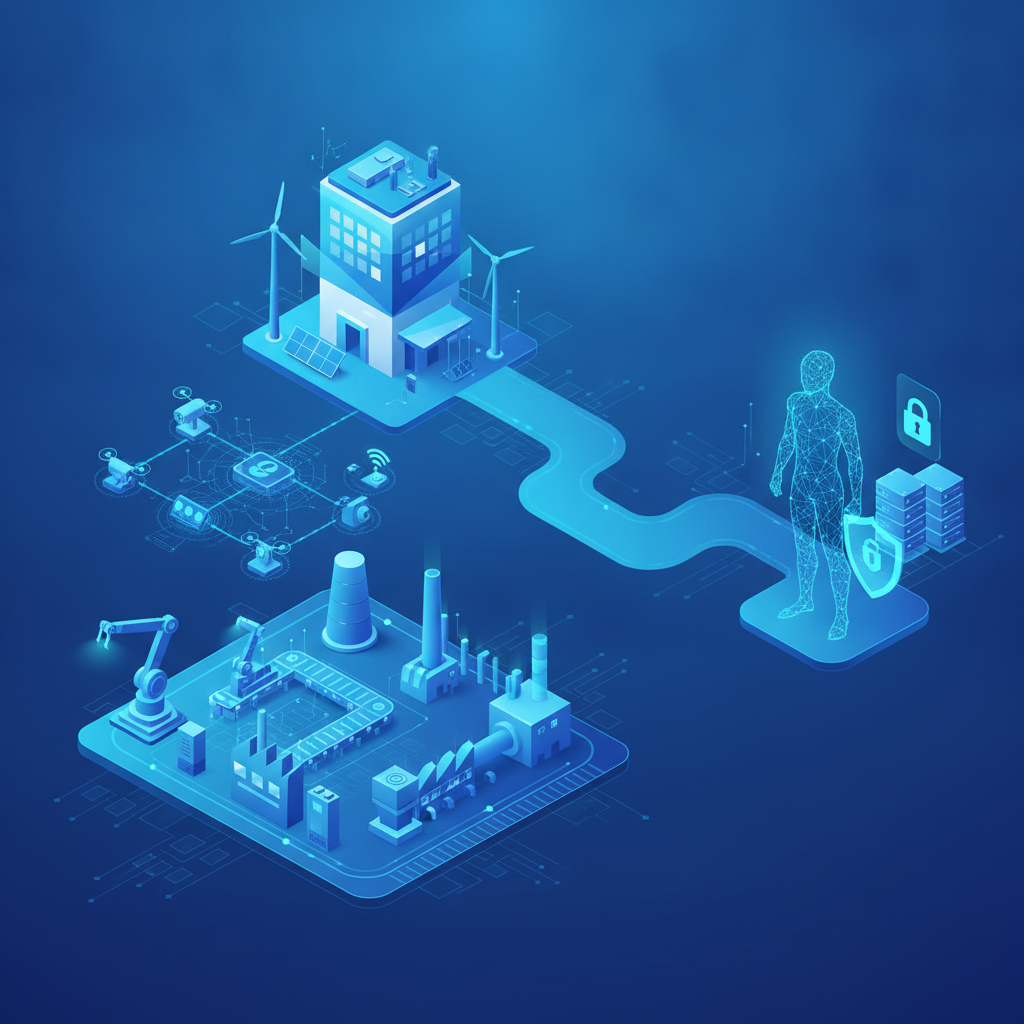


Modern facilities are drowning in telemetry. Every second, programmable logic controllers (PLCs) across industrial plants and smart buildings collect vast streams of sensor data from motors, drives, and actuators. Human operators are often expected to interpret this noise and catch microscopic anomalies before they snowball into catastrophic and expensive breakdowns.
Recently, a coalition of researchers unveiled a groundbreaking solution: using a game-playing artificial intelligence algorithm to predict machine failures without jeopardizing production safety. By fusing a modified deep reinforcement learning algorithm with traditional industrial safety frameworks, this AI shoulders the heavy analytical lifting, allowing operators to transition from reactive troubleshooting to true proactive maintenance.
Overcoming the Predictive Maintenance Bottleneck
The core of this breakthrough is an algorithm named MonteCarloDQN. It builds on the Deep Q-Network, a reinforcement learning method where an AI agent learns via trial and reward. At every moment, the AI observes equipment states and chooses one of three actions: Monitor, Alert, or Repair.
What sets this apart from previous AI attempts is the hyperparameter tuning. Traditional AI tuning methods are either computationally explosive or dangerously random. Instead, this team utilized Monte Carlo Tree Search—the same technique powering superhuman game-playing AI—to adaptively explore and optimize the network’s configurations.
The AI is heavily penalized for passive observation during high-risk states and rewarded for correctly recommending repairs. The result is a highly stable, robust model capable of predicting overcurrent, overvoltage, and thermal faults long before they trip physical alarms.
Bridging AI with Modbus TCP and ICS Security
Testing an algorithm in a simulated sandbox is one thing; deploying it on physical hardware is another. The researchers built a real-world test bench using a Modicon PLC and a Schneider Electric frequency converter—equipment ubiquitous in both factory conveyor belts and HVAC systems in smart buildings.
A Python data logger polled the drive’s internal registers over Modbus TCP approximately five times per second. It captured vital metrics like motor current, thermal state, and DC bus voltage. Timing measurements proved that the entire AI diagnostic loop took only 45 milliseconds over the Modbus TCP link.
This blazing-fast response easily fits within a standard 100-millisecond PLC scanning cycle. From an ICS security and operational standpoint, this is a massive win. It proves that advanced machine learning can ingest high-frequency data over standard industrial protocols without injecting latency into mission-critical control loops.
The GEMMA Framework: Keeping Deterministic Control Intact
Perhaps the most vital takeaway for building automation architects is how the AI integrates into existing safety architectures. The researchers bolted their AI module onto the GEMMA model, an established European guide for organizing automated operating modes.
The AI acts strictly as an advisory layer. It signals when an analysis is complete and flags diagnosed problems, but it requires an operator to validate the verdict. If the AI detects a critical fault and the operator confirms, the GEMMA state machine executes a safe, controlled emergency stop.
Crucially, the AI never overrides hard-coded safety logic. If communication with the AI fails, the standard protection chain in the PLC continues uninterrupted. This architecture adds profound intelligence without introducing unpredictable stochastic behavior into deterministic control loops.
Translating Factory AI to Smart Buildings with BAaaS
While this research was validated on industrial test benches, the implications for smart buildings are enormous. The exact same variable frequency drives (VFDs) and PLCs manage the HVAC chillers, elevators, and ventilation fans in commercial real estate. To harness this level of AI prediction, properties need an ecosystem capable of unifying fragmented building networks.
This is where BAaaS.io seamlessly bridges the gap. By providing Building Automation as a Service, the platform offers centralized control and real-time telemetry across a property’s entire infrastructure. It transforms raw sensor data into an integrated building information sphere.
Leveraging proactive maintenance and automated environmental adjustments through BAaaS.io allows facility operators to detect equipment degradation early. Not only does this prevent costly HVAC breakdowns, but optimizing these massive systems drives exceptional energy efficiency, significantly reducing a commercial building’s carbon footprint.
Conclusion
The successful integration of game-search-inspired AI with legacy Modbus TCP networks proves that Industry 4.0 doesn’t require ripping out existing infrastructure. By layering intelligent, self-improving diagnostics over traditional deterministic safety logic, facilities can achieve unprecedented reliability.
As these algorithms scale, the line between industrial automation and commercial building management will continue to blur. Embracing modern cloud ecosystems to deploy these insights will be the defining factor for organizations looking to optimize operational costs, maximize safety, and deliver superior occupant experiences.