
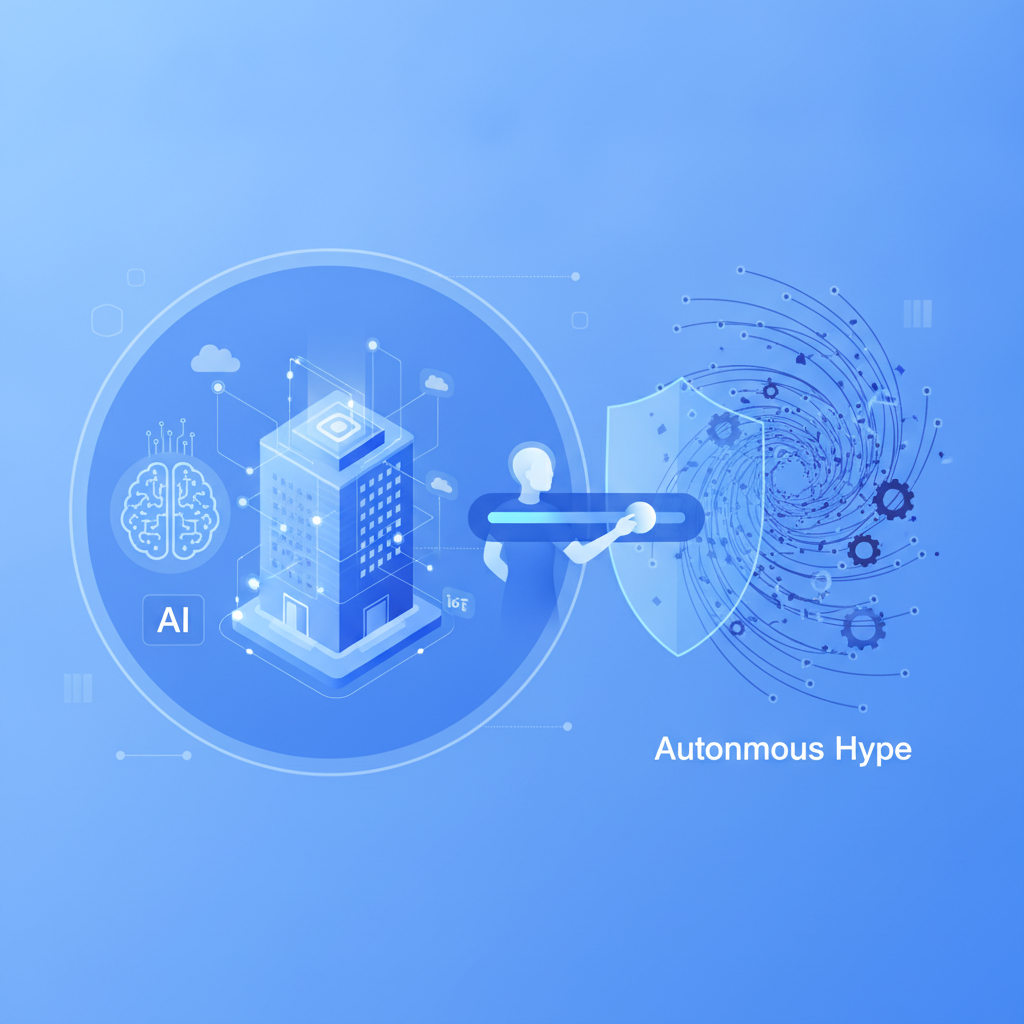
The boundless hype surrounding artificial intelligence often collides with a stark reality when deployed in the physical realm of commercial buildings and industrial control systems (ICS). At the recent Fortune AIQ Summit, technology leaders from Honeywell and Ecolab offered a refreshing dose of truth regarding AI’s current limitations in Operational Technology (OT).
Far from painting a picture of fully autonomous smart buildings, these executives highlighted the critical bottlenecks scaling AI in physical infrastructure. From prohibitive token costs to the absolute necessity of human oversight, the transition to AI-driven building automation is proving to be an evolution in semi-autonomous architecture rather than an overnight revolution.
The 99.9999% Reliability Gap in Mission-Critical OT
Industrial facilities and commercial buildings operate under strict life-safety and operational mandates that do not tolerate software beta-testing. While frontier AI models are celebrated for reaching roughly 85% accuracy, building operators and industrial customers demand 99.9999% reliability from their systems.
Unlike consumer technology, physical equipment cannot simply be taken offline for routine patches without massive business impact. As Honeywell’s CTO Suresh Venkatarayalu accurately noted, while a consumer EV might endure an hour-and-a-half downtime for an update, shutting down a commercial building’s HVAC or fire control system for that long is simply unacceptable. This fundamental difference cements the need for highly controlled, operator-supervised updates.
Tokenomics: When AI Costs More Than Human Operators
Beyond accuracy limitations, there is a harsh economic reality to AI in continuous building operations: tokenomics. Pumping continuous sensor telemetry through top-tier frontier models for high-volume, real-time analytics can quickly become more expensive than traditional human facility management.
Ecolab navigated this financial hurdle by moving away from exclusive reliance on the most massive models. By optimizing open-source models for specific tasks, they managed to cut token costs by up to 80%. In building automation, not every variable air volume (VAV) box optimization or chiller sequence requires the most computationally heavy, expensive AI “engine” on the market to achieve efficiency.
Bridging the Gap: BACnet Integrations and Sovereign Data
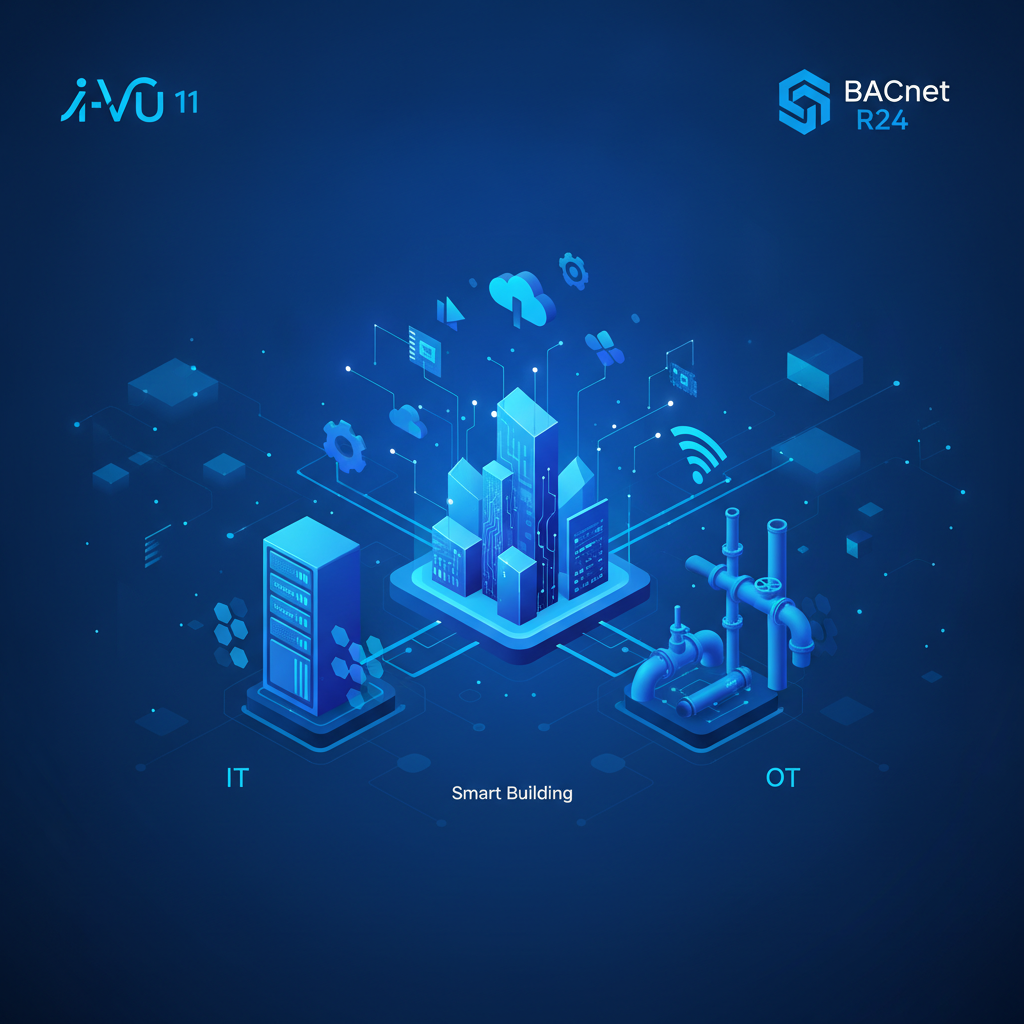
For AI to deliver actionable value, it requires structured, high-quality data. Honeywell relies on a “see, think, act, and learn” framework, which starts with thoroughly cataloging physical assets—HVAC, security, and fire systems—and connecting them over robust, standardized protocols like BACnet. However, exposing these ICS networks to AI introduces complex cybersecurity and data sovereignty challenges.
This is where specialized cloud ecosystems like BAaaS.io become indispensable. By delivering centralized control and continuous real-time telemetry across a unified network, BAaaS.io provides AI agents with the secure, normalized data they need. It creates an integrated building information sphere, allowing systems to make automated environmental adjustments securely, keeping data sovereign and infrastructure hardened.
Chasing 40% Energy Savings with Horizontal AI
Isolated AI deployments that only address singular functions rarely yield enterprise-level ROI. The true transformational value comes from “horizontal” AI—systems that span across operations, energy management, and tenant experience, working backward from specific business outcomes like carbon reduction or lowered operational expenditure.
Building owners who previously celebrated 7% energy savings from legacy PID controls and basic scheduling are now pushing the envelope. With robust data foundations, predictive maintenance, and optimized cross-functional models, modern facilities are targeting ambitious 30% to 40% efficiency gains without sacrificing occupant comfort.
Conclusion
The integration of artificial intelligence into building automation is inevitable, but a fully autonomous, “set-it-and-forget-it” smart building remains a distant reality. Today’s most successful strategies rely on a “human-in-the-lead” model, where AI acts as a powerful co-pilot rather than a replacement for skilled facility engineers.
By prioritizing data security, managing AI token costs, and utilizing robust centralized platforms, facility operators can safely harness the intelligence of AI. The future of commercial real estate isn’t about handing the keys over to a machine; it is about equipping operators with the ultimate tools to maximize efficiency, safety, and tenant satisfaction.