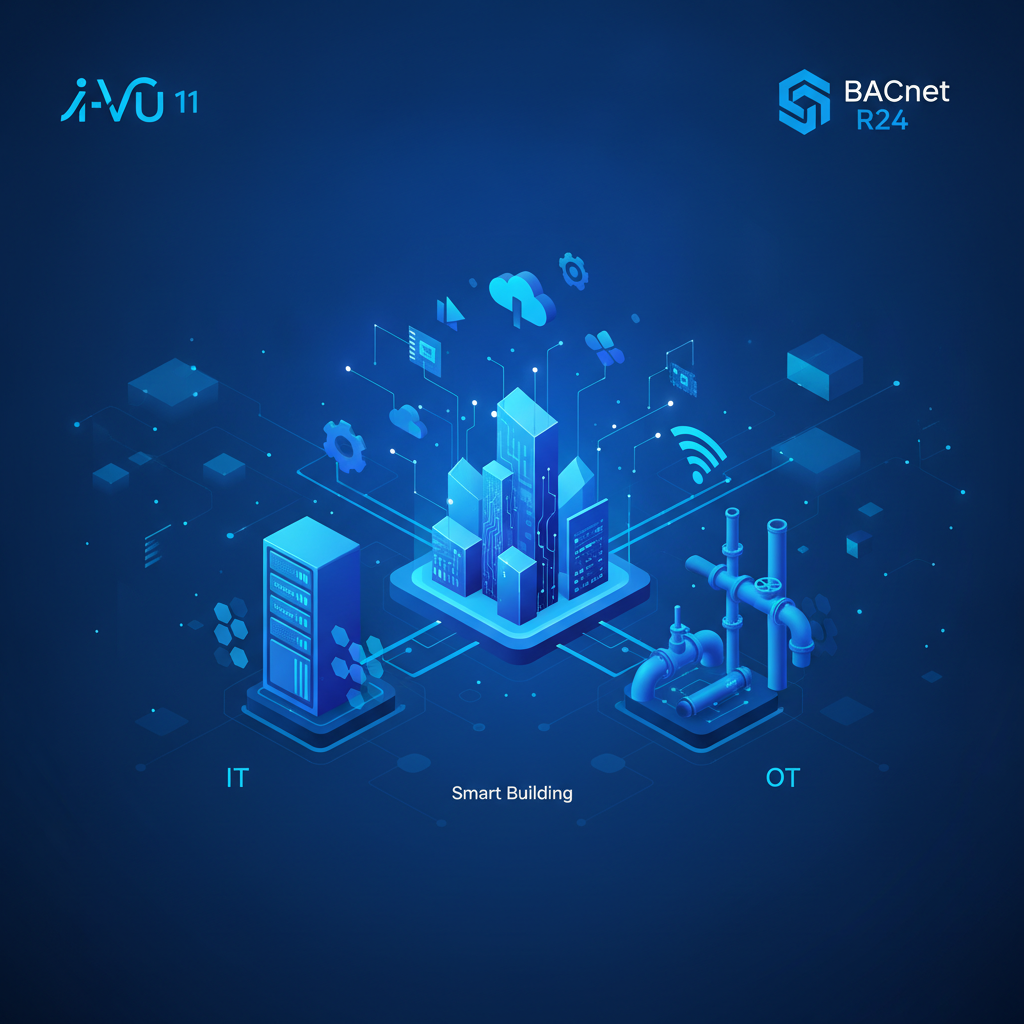


The U.S. Cybersecurity and Infrastructure Security Agency (CISA) has released critical new guidance aimed at reducing the attack surface of IT, OT (Operational Technology), and ICS (Industrial Control Systems). As commercial facilities evolve into highly connected hubs, this directive serves as an urgent wake-up call for building operators to lock down their internet-facing assets.
The boundary between traditional enterprise IT and building automation is rapidly disappearing. While remote connectivity empowers facility managers with advanced analytics and real-time HVAC control, leaving operational systems exposed to the public internet is a major operational and financial liability.
The Hidden Danger of Exposed Building Automation
Historically, building automation systems (BAS) operated on isolated, air-gapped networks. Today, the rapid transition toward smart buildings has interconnected everything from BACnet chillers to centralized lighting controllers. Unfortunately, many of these industrial protocols were engineered for real-time reliability, not inherent cybersecurity.
When a BACnet router, supervisory controller, or IoT gateway is easily searchable on public internet scanners, it instantly becomes a high-value target for threat actors. Unrestricted remote access allows attackers to bypass perimeter defenses, potentially manipulating environmental controls, causing equipment damage, or pivoting directly into corporate enterprise networks.
Executing CISA’s Mitigation Strategies in OT Environments
CISA’s Internet Exposure Reduction guidance is built on a clear, actionable methodology: identify connected systems, eliminate unnecessary public access, and rigorously secure what remains. For facility engineers, this requires a comprehensive site audit to uncover shadow IT, unauthorized cellular modems, and legacy port-forwarding rules.
Once network visibility is established, unnecessary remote access must be systematically terminated. For systems that absolutely require external connectivity, standard port-forwarding is no longer acceptable. Strengthening ICS security requires implementing robust multi-factor authentication (MFA), secure VPN tunnels, and zero-trust architectures to shield critical building infrastructure.
Balancing Connectivity and Security with Managed Cloud Ecosystems
Securing a facility does not mean sacrificing the operational efficiency of remote management. The primary challenge is achieving seamless, real-time control without exposing vulnerable on-premise controllers to global internet traffic. This requires transitioning from outdated network configurations to modern, managed cloud architectures.
A specialized platform like BAaaS.io solves this challenge by providing a highly secure, centralized cloud ecosystem tailored specifically for building automation. Rather than punching holes in a building’s firewall to access local devices, BAaaS.io utilizes secure, outbound-only connections to safely aggregate real-time telemetry, HVAC performance data, and occupancy metrics.
This Building Automation as a Service framework enforces strict role-based access control and built-in authentication. Property operators gain the full benefits of intelligent building management—such as proactive maintenance, automated scheduling, and enhanced tenant comfort—while strictly adhering to CISA’s guidelines on minimizing internet exposure.
Conclusion
The latest CISA guidance is a definitive signal that the era of “security through obscurity” in operational technology is officially over. Protecting industrial systems, critical infrastructure, and commercial real estate demands proactive and continuous cybersecurity hygiene.
By auditing internet-facing assets, stripping away legacy remote access points, and migrating to secure cloud platforms, organizations can dramatically reduce their cyber risk profile. Securing the perimeter ensures that smart buildings remain highly intelligent, deeply integrated, and fundamentally resilient against modern cyber threats.