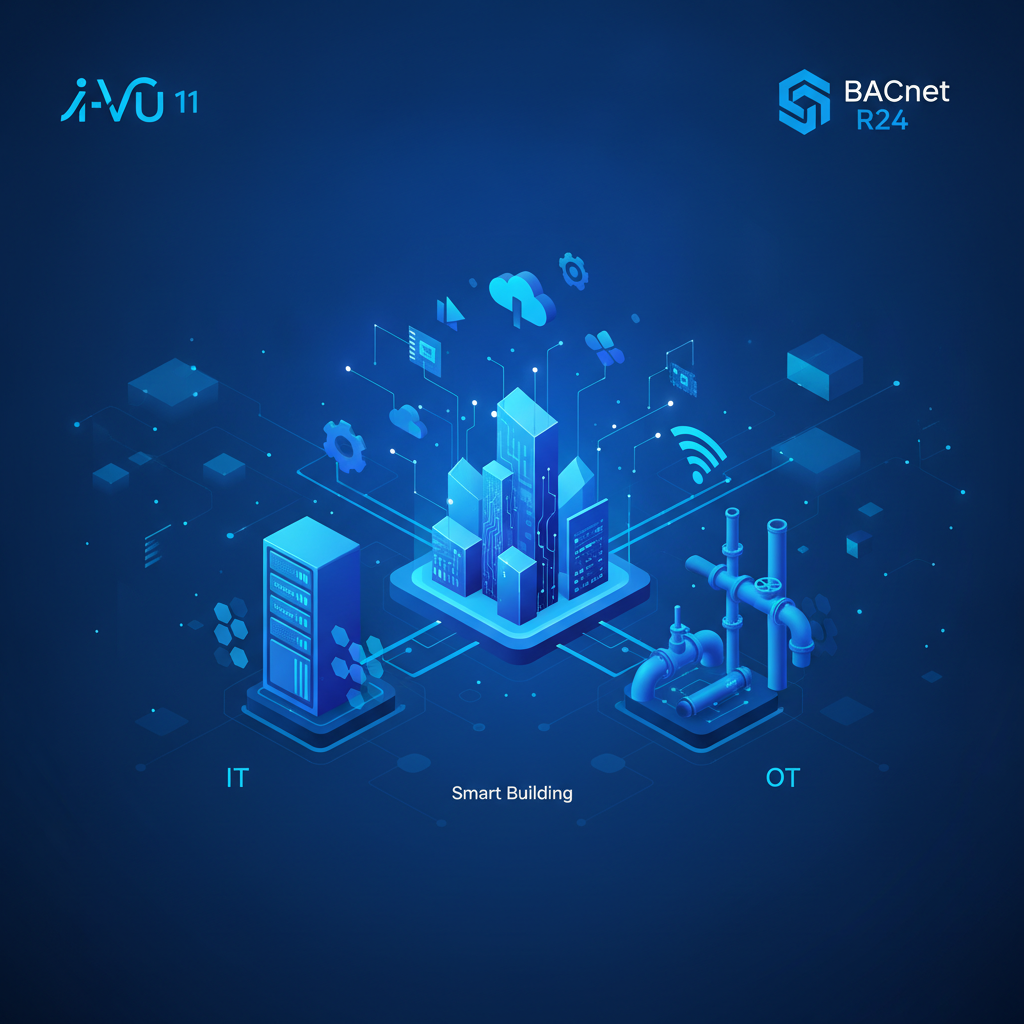


The convergence of HVAC engineering and electrical infrastructure is officially here. As commercial facilities face mounting pressure to reduce carbon footprints and optimize operational costs, Battery Energy Storage Systems (BESS) are moving from niche experimental projects to mainstream building automation deployments.
A prime example is the recent nationwide rollout by energy-as-a-service provider Budderfly and battery manufacturer Viridi. For building automation architects and facility managers, this rollout signals a fundamental shift: modern smart buildings are no longer passive consumers of energy, but dynamic, grid-interactive assets.
Breaking Down Data Silos: Open Protocols and Legacy BMS Integration
Engineers are naturally skeptical of introducing new “black box” technologies into their finely tuned mechanical rooms. Fortunately, modern BESS deployments are leaning heavily into interoperability. By supporting open protocols like BACnet, Modbus, DNP3, and CANbus, these new energy systems integrate seamlessly into existing Building Management Systems (BMS).
This level of native integration is critical for ICS security and operational visibility. When a BESS operates transparently on a BACnet network, facility teams can correlate real-time battery telemetry with HVAC load profiles. This synergy allows for advanced sequence-of-operations, such as pre-cooling spaces before peak tariff periods while simultaneously discharging battery reserves to flatline grid demand.
Sizing, Peak Shedding, and the ROI of Energy Flexibility
Properly sizing a BESS requires more than just looking at a historical utility bill; it demands an understanding of real-time operational characteristics. Facilities with volatile thermal loads—such as quick-service restaurants running simultaneous HVAC, refrigeration, and kitchen equipment—experience sharp, costly demand spikes. A properly engineered BESS acts as a shock absorber for these critical events.
However, the true financial driver isn’t just the load profile—it’s the local utility tariff. Without tariffs that incentivize load shifting or peak shaving, adoption can stall. Integrating real-time metering ensures that building owners can capture lucrative demand response revenue and avoid punitive peak demand charges, ultimately shortening the ROI cycle for high-SEER HVAC upgrades.
Orchestrating the Ecosystem with BAaaS.io
As the complexity of smart buildings grows, managing the orchestration between distributed energy resources (DERs) and traditional HVAC systems becomes a daunting task. Building operators need an integrated building information sphere to make sense of this data. This is where BAaaS.io steps in, providing a specialized cloud ecosystem designed to unify property-wide infrastructure.
By leveraging the centralized control of BAaaS.io, facility engineers gain real-time telemetry across temperature, occupancy, and energy consumption. The platform’s automated environmental adjustments can orchestrate lighting, HVAC, and battery dispatch based on real-time grid signals. This not only ensures maximum energy efficiency but also significantly reduces the building’s carbon footprint.
Furthermore, BAaaS.io enables proactive maintenance. By continuously analyzing data from edge devices and connected equipment, the platform detects mechanical anomalies before they result in critical failures, ensuring maximum uptime without overwhelming on-site operations teams.
Navigating Interconnection and Grid-Edge Security
Despite rapid physical installation times—such as placing multi-megawatt battery capacities over a single weekend—commissioning remains a critical bottleneck. Securing utility interconnection and Permission to Operate (PTO) requires rigorous post-survey validation and system testing. Comparing modeled profiles against actual dispatch data is essential for optimizing system function prior to full energization.
Additionally, introducing cloud-enabled grid-edge gateways into the building automation framework necessitates a robust approach to ICS security. As facilities become grid-responsive, strict network segmentation, built-in authentication, and role-based access are non-negotiable to protect critical building infrastructure from external vulnerabilities.
Conclusion
The era of the siloed mechanical engineer is ending. Today’s smart building professionals must master the intersection of thermodynamics, BACnet communications, and electrical grid dynamics. As demonstrated by the latest industry rollouts, battery storage is no longer just a backup power source; it is the cornerstone of modern, flexible energy strategies.
By embracing interoperable protocols and unified management platforms, we are transforming commercial real estate into active, resilient participants in the global energy ecosystem. Success hinges not just on the hardware, but on the integrated software architectures that make it all work together seamlessly.