
As smart buildings mature, facility operators face an accelerating demand for energy efficiency, stringent compliance, and robust ICS security. The recently announced 2027 AHR Expo Innovation Award winners provide a critical blueprint for the future of the built environment. Showcasing breakthroughs across 10 distinct categories, these technologies solve complex operational challenges—from integrating AI into mechanical workflows to pushing the boundaries of high-density thermal management.
More than just a hardware showcase, this year’s winners highlight a definitive shift toward unified, data-driven architecture. As commercial real estate grapples with aggressive decarbonization goals and aging infrastructure, these advancements serve as the essential building blocks for modernizing HVACR and building automation systems.
Overcoming Retrofit Barriers with Wireless BACnet and Smart Actuation
Retrofitting legacy buildings often presents a logistical nightmare, primarily due to the invasive nature and high labor costs of running new RS485 communication trunk lines. LumenRadio’s W-BACnet Compact addresses this directly as the industry’s smallest wireless BACnet MS/TP cable replacement. It utilizes a self-healing wireless mesh to ensure robust, interference-resistant connectivity while preserving native BACnet interoperability.
Similarly, life safety maintenance is experiencing a much-needed digital overhaul. Belimo’s FSKN Remote Inspection Module won the Tools & Instruments category by digitizing fire and smoke damper testing. By seamlessly integrating with Building Management Systems (BMS) via BACnet or Modbus, it automates NFPA 80 and 105 compliance testing—drastically reducing labor hours and physical audit risks.
To fully capitalize on these distributed BACnet nodes, facility managers need a unified ecosystem. Platforms like BAaaS.io provide intelligent centralized control, securely aggregating real-time telemetry from wireless sensors and automated dampers to create a truly responsive smart building environment.
AI and High-Density Cooling: Engineering for the New Thermal Reality
The exponential growth of edge computing and AI has pushed traditional HVAC infrastructure past its functional limits. In response, Chemours captured the Refrigeration category with its HFO-1336mzz(E) two-phase direct-to-chip liquid cooling fluid. By removing heat directly at the processor level, this closed-loop innovation prevents thermal bottlenecks in high-density smart building IT closets and enterprise data centers.
On the operational side, artificial intelligence is streamlining how mechanical systems are designed, bid, and deployed. Rebar’s AI MEP Operating System took the Software award by transforming the highly fragmented estimation process into a cohesive, automated workflow.
Using specialized AI agents to extract equipment data directly from blueprints, platforms like Rebar reduce engineering cycles from days to minutes. This rapid deployment model aligns perfectly with agile construction, ensuring that complex automation topologies are accurately scoped and quickly brought online.
Driving Decarbonization Through Sustainable HVAC Solutions
Energy optimization is the cornerstone of contemporary facility management. Eco-logical LLC’s Omni Series Split System Heat Pump Water Heater represents a major leap in domestic hot water efficiency, offering an unprecedented Uniform Energy Factor (UEF) of 4.23 while keeping the refrigeration cycle entirely outside the building envelope.
Water conservation is equally critical to a building’s overall resource footprint. SPX Cooling Tech’s Marley WaterGard Filtration System won the Sustainable Solutions category by enabling evaporative cooling equipment to operate at significantly higher cycles of concentration. Rejecting dissolved minerals before they enter the system reduces both makeup water demand and chemical blowdown.
When combined with continuous environmental monitoring, these mechanical innovations dramatically lower a facility’s carbon footprint. Integrating these high-efficiency systems with real-time occupancy and telemetry data ensures they operate dynamically, matching output perfectly to building load.
Bridging the Skills Gap in Building Automation
The rapid deployment of smart building technology is quickly outpacing the availability of qualified technicians who understand both mechanical systems and ICS security. The AHR Expo proactively addresses this threat through its Workforce Development program.
By channeling entry fees into student field trips, host-city educational funding, and hands-on laboratory equipment, the initiative directly invests in the next generation of building engineers and system integrators.
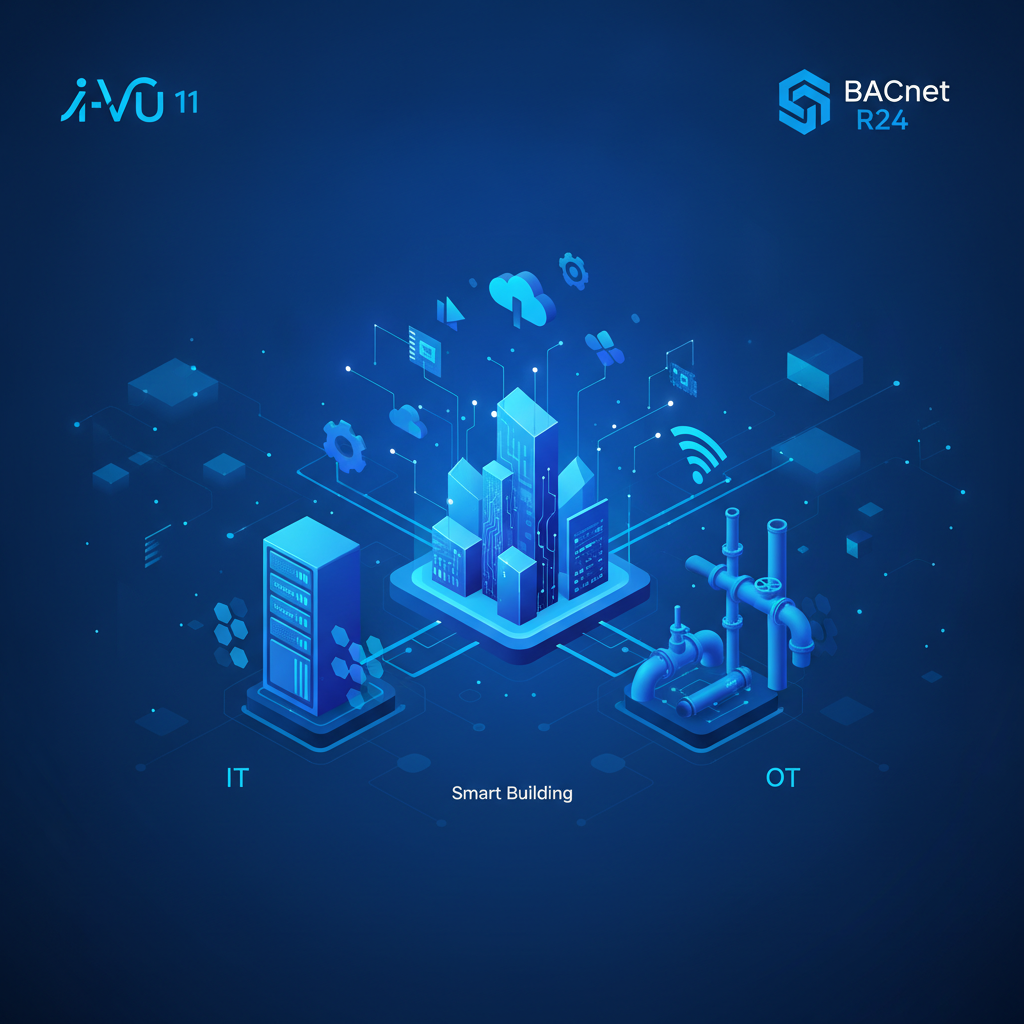
Developing talent capable of navigating advanced IT/OT convergence is crucial for the industry’s survival. Without a highly skilled workforce, the true potential of automated scheduling, secure access control, and proactive maintenance cannot be fully realized or sustained.
Conclusion
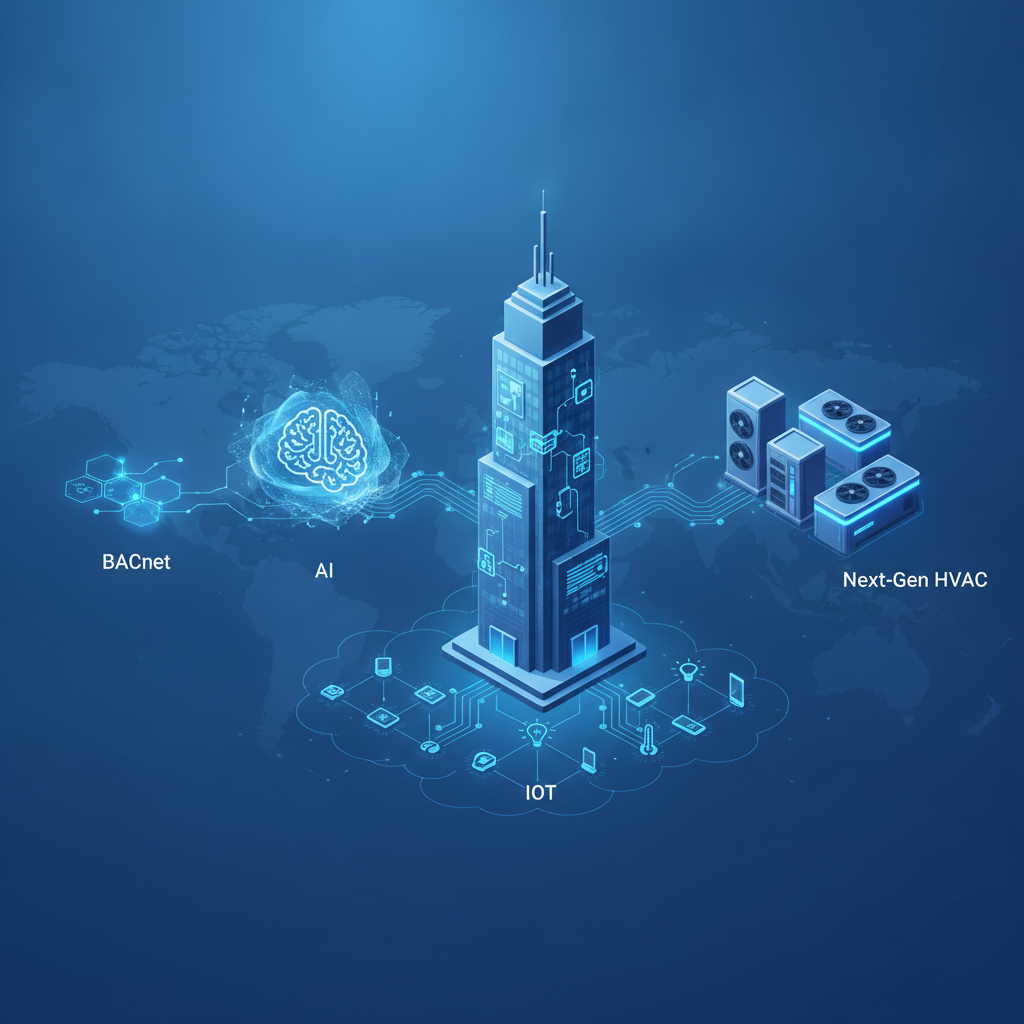
The 2027 AHR Expo Innovation Awards confirm that the future of HVACR relies on seamless integration, aggressive decarbonization, and intelligent automation. As technologies like wireless BACnet mesh networks and AI-driven MEP software become industry standards, the expectations placed on facility operators and building networks will only grow.
To stay competitive and compliant, building owners must embrace platforms that unify these disparate innovations into a single, secure operational pane of glass. The tools to build the ultimate smart environment are here—success now depends on how effectively we connect them.