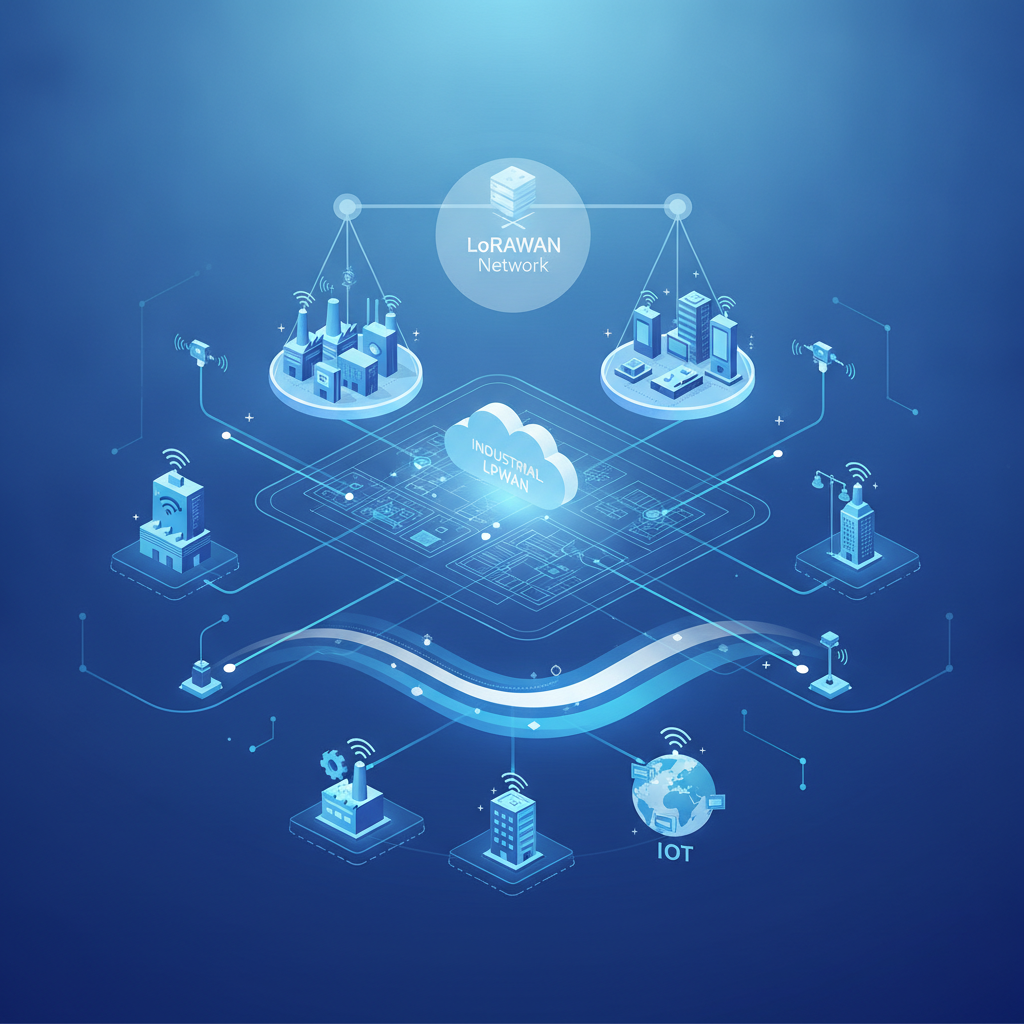

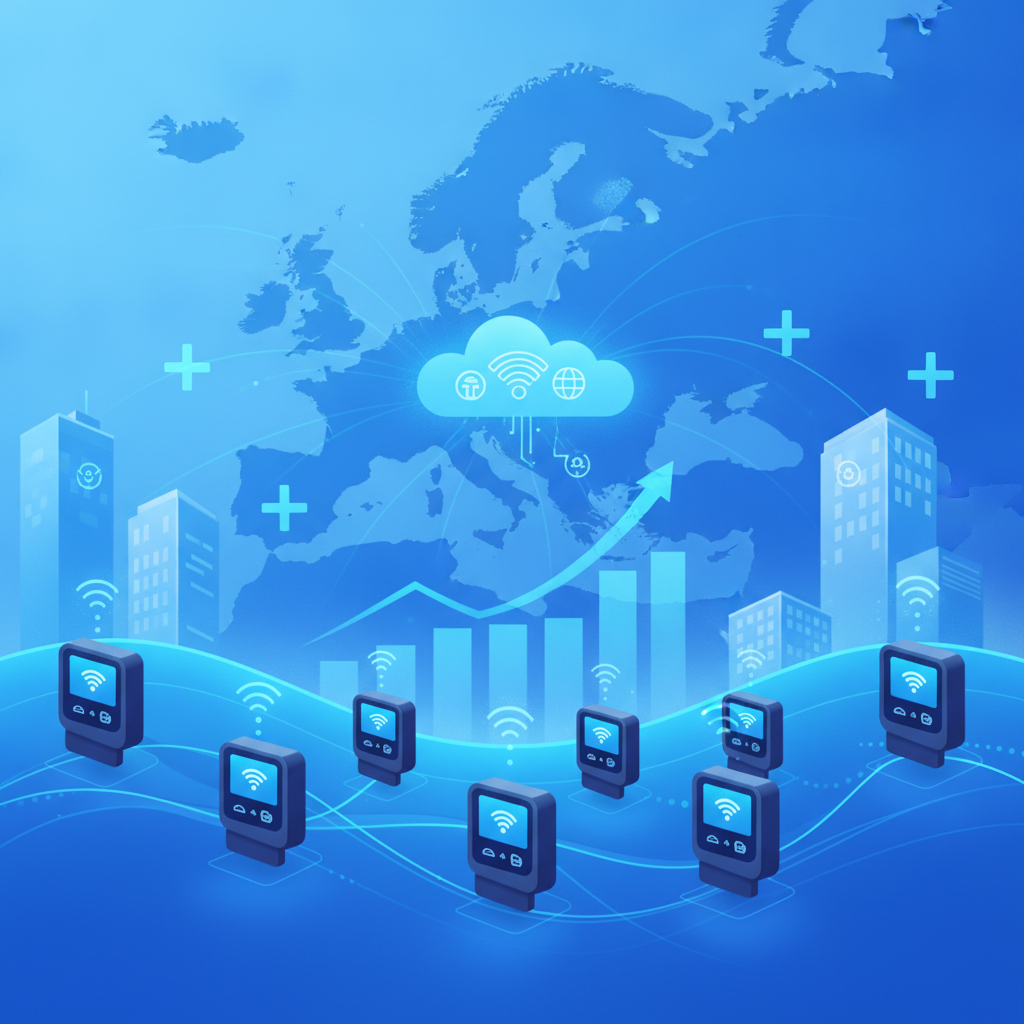
Municipal utility infrastructure is undergoing a decisive shift toward open, decentralized communications. Recent market intelligence from Enlit Europe confirms that European public tenders specifying LoRaWAN® have more than quadrupled between 2019 and 2025. With utilities and commercial operators demanding long-term operational longevity, multi-vendor interoperability, and freedom from proprietary lock-in, LoRaWAN has solidified its position as the de facto standard for scalable metering networks.
Of the 150 million LoRaWAN devices currently deployed worldwide, over 30 million are smart meters—representing one in every five active endpoints. From municipal water utilities in France and the UK to commercial energy submetering deployments across Germany and Spain, infrastructure planners are replacing brittle proprietary radio architectures with standardized LPWAN ecosystems designed to survive multi-decade lifecycles.
The Procurement Wave: Water Metering and Municipal Mandates Lead Growth
Procurement telemetry published by Kurrant’s Tender Tracker illustrates an accelerating trajectory: European public procurement referencing LoRaWAN maintained double-digit expansion throughout 2025, climbing 13% year-over-year after quadrupling over the prior five years. Municipal water metering dominates this volume, accounting for approximately half of all LoRaWAN-related public RFPs, followed directly by building submetering, core network rollouts, and smart street lighting.
Geographically, France leads overall deployment volume, bolstered by national water modernization efforts, closely followed by Spain and Germany. A critical bellwether is the UK’s AMP8 regulatory investment cycle (2025–2030) for water utilities in England and Wales: an analysis by Netmore reveals that LoRaWAN was specified in 70% of publicly announced smart water metering decisions, either as the sole communications protocol or as the primary pillar of a dual-technology architecture.
Engineering Massive IoT: Why Open Standards Win in Critical Infrastructure
Utilities and civil engineers make infrastructure decisions meant to operate without hardware intervention for 15 to 20 years. Proprietary RF solutions and vendor-locked cellular subscriptions carry systemic risks, including carrier sunsetting, recurring licensing overhead, and single-source hardware supply chains. LoRaWAN mitigates these vulnerabilities by operating on license-free sub-GHz spectrum governed by a global multi-vendor ecosystem.
Sub-GHz RF Penetration and Power Efficiency
Water and gas meters are frequently installed underground, inside metal-lidded pits, or behind reinforced concrete basement walls. LoRaWAN’s high link budget and chirp spread spectrum (CSS) modulation deliver the deep RF penetration required to reach subterranean assets while drawing negligible quiescent current, safely securing 10-to-15-year battery lifecycles on single lithium-thionyl chloride cells.
Enterprise Resiliency and Lifecycle Management
Features such as Firmware Updates Over the Air (FUOTA), relay implementations for extreme dead-zone coverage, and native satellite roaming ensure operational longevity. Multi-million-node rollouts demonstrate this carrier-grade reliability: ZENNER Connect currently manages over 12 million connected endpoints, Veolia operates more than 4 million active meters across France, and Itron has deployed more than 3 million LoRaWAN assets worldwide.
Unifying Metering Telemetry with Cloud-Native Building Management
While municipal utilities capture aggregate consumption data at the property boundary, commercial real estate portfolios, university campuses, and industrial plants face an internal challenge: translating raw LoRaWAN submetering data into automated building operations. Submetering without closed-loop automation creates isolated data silos that fail to drive real-time energy efficiency or meet corporate ESG targets.
This operational convergence is where modern platforms like BAaaS.io bridge the gap between industrial IoT networks and building management systems. As a cloud-native Building Automation as a Service platform, BAaaS.io natively integrates LoRaWAN endpoints—via Semtech Packet Forwarder and Basics Station protocols—and harmonizes their telemetry alongside traditional on-premises operational protocols, including BACnet/IP, BACnet MS/TP, Modbus, LonWorks, and KNX.
Rather than stranding water, gas, and power meter telemetry inside a separate IoT dashboard, BAaaS.io normalizes this sensor data into a single operational data model. Facilities teams can leverage live wireless submetering streams to automatically orchestrate HVAC chiller loads over BACnet, shed non-essential electrical circuits via Modbus, and generate real-time carbon baseline reporting without deploying expensive on-premises supervisory head-end servers or fragile VPN tunnels.
Conclusion
The quadrupling of European smart metering tenders marks a definitive turning point: LoRaWAN has matured from an emerging alternative into the baseline specification for large-scale utility and submetering infrastructure. Its open multi-vendor ecosystem, field-proven RF propagation, and zero-licensing-fee architecture provide the long-term supply security that capital-intensive infrastructure demands.
As commercial facility managers and utility engineers look toward the next decade of decarbonization and resource management, the mandate is clear. Deploying open-standard LoRaWAN hardware—paired with enterprise cloud integration engines capable of unifying disparate operational protocols—is no longer an experimental initiative; it is the blueprint for resilient, future-proof building and utility operations.