
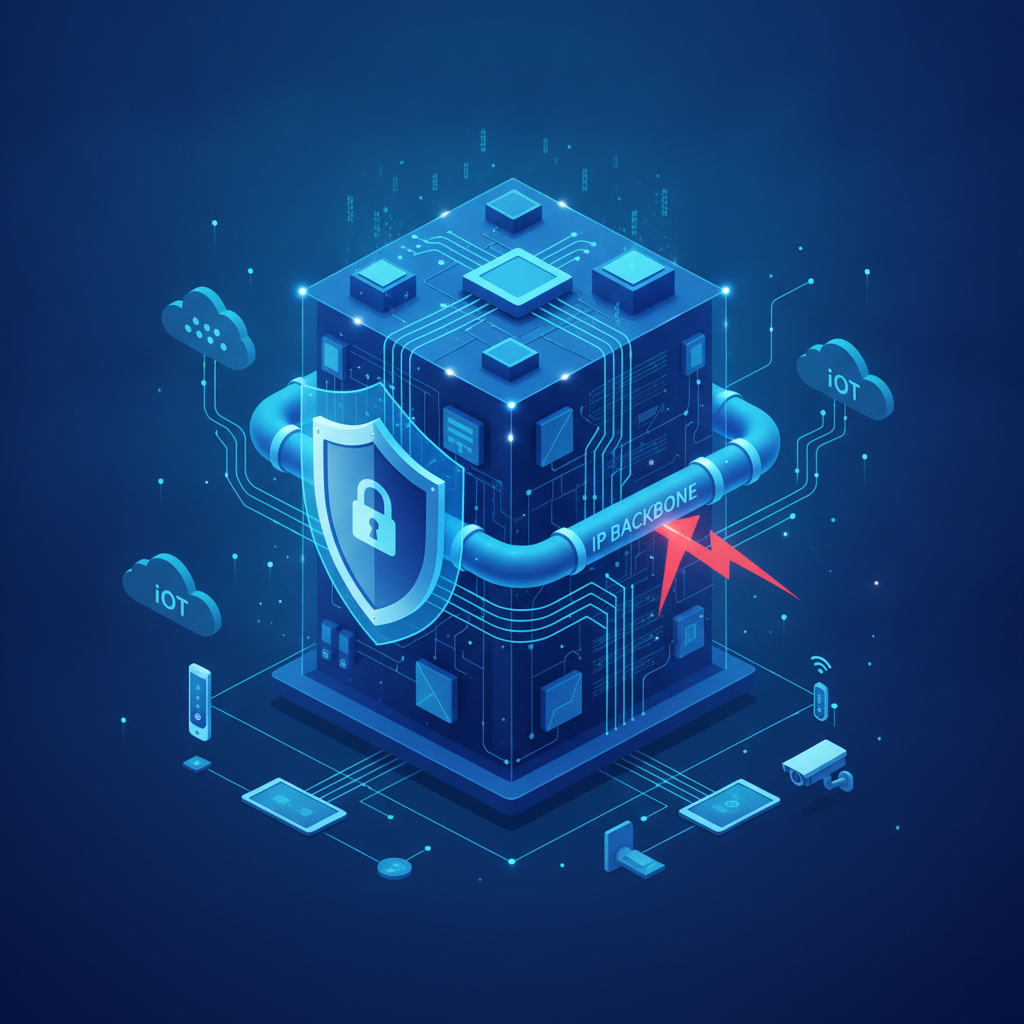
You would never leave an electrical distribution board unlocked in a publicly accessible commercial lobby. Yet, across thousands of commercial facilities and high-end residential estates worldwide, the digital equivalent has quietly unfolded. For years, the fastest shortcut to remote diagnostics and off-site maintenance was forwarding UDP port 3671 straight through the perimeter firewall to a KNX IP interface. It solved an immediate operational convenience, but it created an unauthenticated backdoor accessible to internet-wide reconnaissance tools like Shodan and Censys.
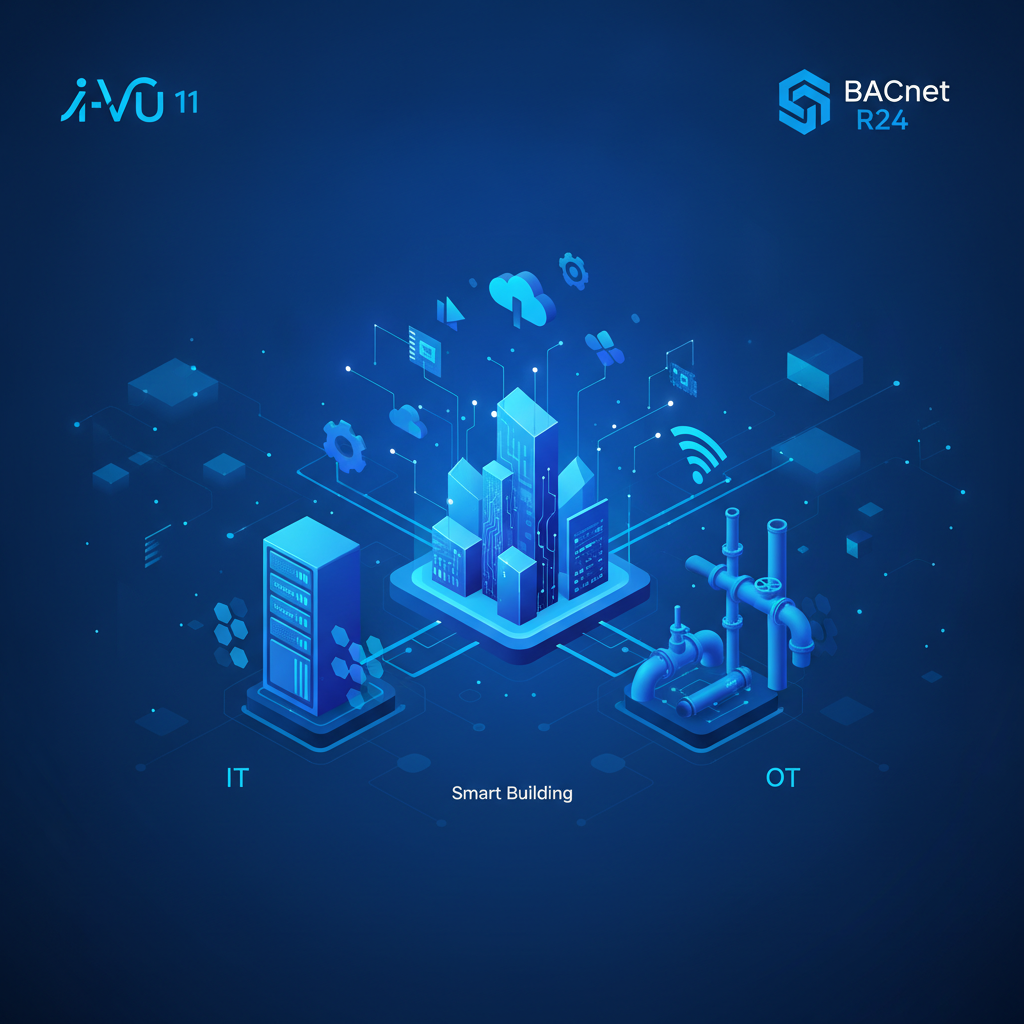
As building automation systems converge with enterprise IT infrastructure, the operational resilience of smart facilities hinges on securing the IP boundary. Retrofitting cybersecurity into legacy KNX topologies does not mandate ripping out functional field-level twisted-pair bus lines. By auditing ingress vectors, segmenting local traffic, and deploying modern supervisory architectures, system integrators can neutralize risks while retaining seamless remote serviceability.
Closing the Front Door: Eliminating Insecure Port 3671 Forwarding
Legacy KNXnet/IP protocol specifications were originally engineered under the operational assumption of physically isolated, trusted control networks. Standard KNXnet/IP tunneling and routing protocols lack built-in payload encryption, challenge-response handshakes, and user authentication mechanisms. Consequently, exposing port 3671 publicly enables any malicious actor on the WAN to inject unauthenticated group telegrams, manipulate physical actuators, intercept state changes, or corrupt device memory registers.
Closing external port 3671 does not mean surrendering remote operational visibility. Instead, engineering teams must transition to authenticated, outbound-initiated connectivity models. Traditional perimeter VPNs offer one solution, but managing unique site-by-site IPsec tunnels or OpenVPN client profiles across hundreds of disparate client accounts creates severe administrative friction and configuration drift over multi-year asset lifecycles.
Architectural Defense: Segmenting Flat Networks with VLANs
Once perimeter exposure is eliminated, internal lateral movement risks must be resolved. Modern commercial environments aggregate an astonishing array of connected devices: corporate workstations, VoIP phones, smart televisions, dynamic digital signage, guest Wi-Fi networks, and building controls. Placing sensitive building automation hardware on an unpartitioned, flat subnet represents a critical architectural failure.
A compromised peripheral in a conference room should never possess an unobstructed network path to lighting controllers or central plant interfaces. Operational Technology (OT) traffic must reside within dedicated Virtual Local Area Networks (VLANs), enforced by strict Layer 3 Access Control Lists (ACLs) and stateful firewalls. The operational mandate is simple: a field controller or IP gateway should only establish communications with explicit IP endpoints and ports required for supervisory telemetry and maintenance.
Modernizing Legacy Deployments with Zero Trust and KNX IP Secure
Brownfield facilities do not need to be replaced wholesale to achieve enterprise-grade cyber resilience. A strategic migration pathway involves swapping unencrypted legacy IP routers and interfaces with modern hardware supporting KNX IP Secure. KNX IP Secure leverages AES-128 encryption and cryptographic authentication wrappers conforming to EN 50090-3-4, neutralizing packet sniffing, injection attacks, and replay exploits directly at the IP transport layer.
For enterprise-scale portfolios, orchestrating remote operations across multiple protocols and vendors requires a modern operational layer. Platforms like BAaaS.io bridge this operational divide by natively supporting KNXnet/IP Tunneling and Routing within a cloud-native, Zero Trust framework. Operating on Microsoft Azure, BAaaS.io eliminates the need for fragile on-premises supervisory servers or risky perimeter port forwarding. The platform harmonizes live KNX telemetry alongside BACnet/SC, Modbus, and LoRaWAN, offering unified, encrypted supervisory control and cross-protocol automation from a single pane of glass.
The Field Engineer’s KNX IP Maintenance Checklist
During routine maintenance visits, commissioning engineers meticulously verify line couplers, power supply voltages, and bus load factors. The IT/OT interface demands the exact same rigor. Every maintenance schedule should systematically validate the following structural parameters:
- Perimeter Audit: Confirm UDP port 3671 and auxiliary programming ports are completely blocked from external ingress at the edge firewall.
- Network Isolation: Verify that all KNX IP routers, interfaces, and building servers reside on an isolated OT VLAN partitioned from public or guest subnets.
- Access Architecture: Transition legacy remote access setups away from static port forwards toward Zero Trust authenticated gateway architectures.
- Hardware Modernization: Identify legacy unencrypted IP interfaces and schedule structured phased migrations to KNX IP Secure hardware.
- Configuration Hygiene: Audit and document all firewall rules, gateway credentials, and router routing tables to eliminate undocumented legacy bypasses.
Conclusion
Securing a KNX installation does not require re-cabling miles of twisted pair or replacing thousands of actuators and room sensors. Real-world building cyber resilience begins at the network boundary. By removing unauthenticated port exposures, isolating OT traffic via robust network segmentation, and adopting modern zero-trust cloud supervisory platforms, system integrators can protect both physical infrastructure and human occupants from digital vulnerabilities.